Martha Stewart’s AI Startup Is the Hidden Gem Nobody Saw Coming — Meet Hint
Table of Contents
Table of Contents
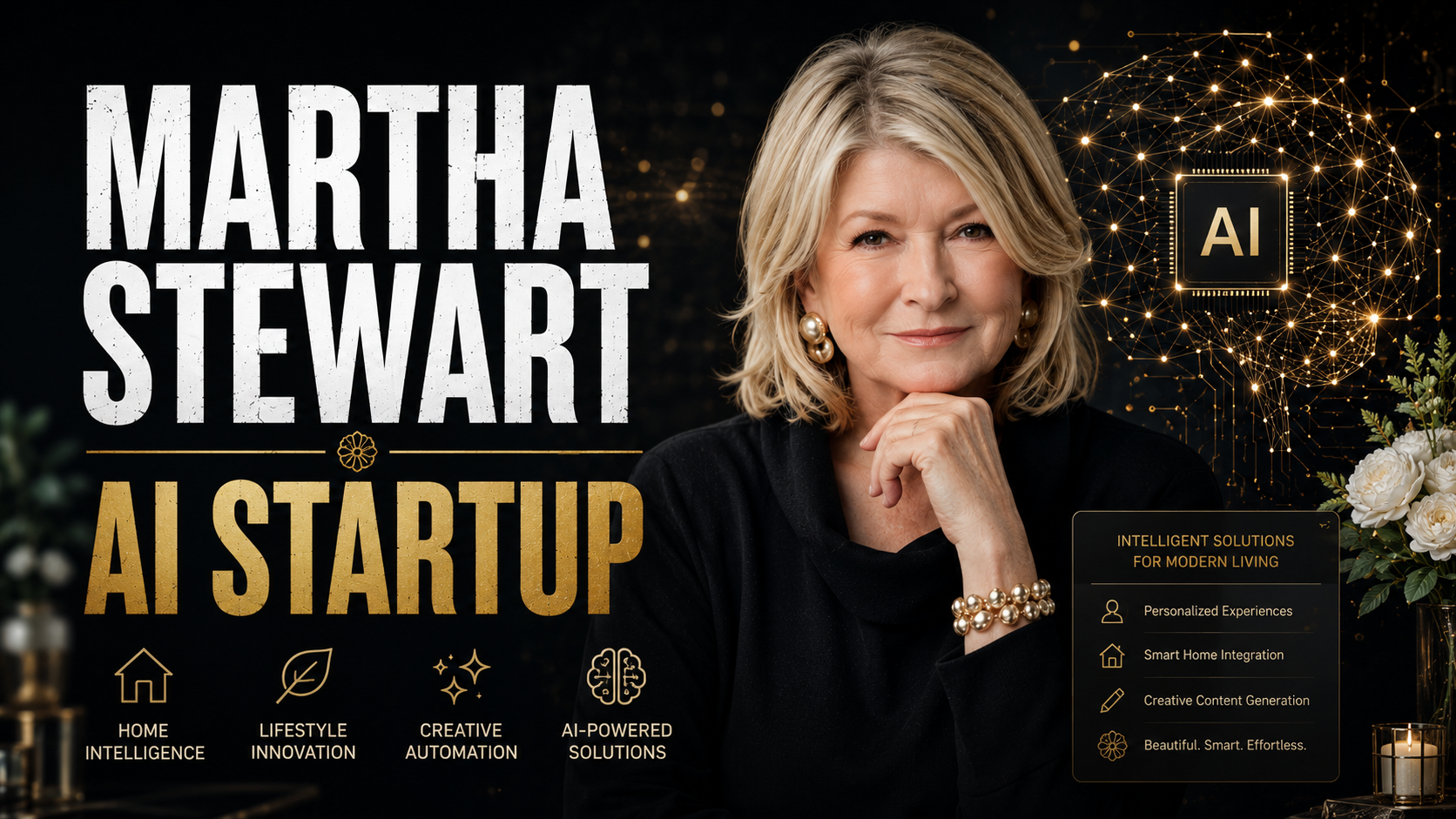
Martha Stewart is 84 years old, has survived federal prison, and just launched an AI startup. If that sentence doesn’t get your attention, nothing will. Hint, co-founded by the domestic living icon and AI engineer Kyle Rush, launched in May 2026 with a $10 million seed round led by Slow Ventures — and it’s targeting one of the most overlooked AI opportunities hiding in plain sight: your home.
The pitch is simple and infuriating because it’s so obviously right: homeownership is a financial nightmare of forgotten maintenance schedules, expiring warranties, mystery utility bills, and surprise repairs. Hint wants to be the AI that remembers everything about your home so you don’t have to — and intervenes before the leaky ceiling becomes a structural failure.
The Problem Hint Is Solving
Most homeowners can’t answer basic questions about their own homes: When was the HVAC last serviced? When does the roof warranty expire? Is the current insurance policy providing actual value or just collecting premiums? What caused that utility bill spike last November?
This isn’t laziness — it’s system failure. Home information is scattered across paper files, PDFs from closings, email threads with contractors, app notifications from utilities, and increasingly ancient inspection reports. Nobody has built a coherent information layer for the home, despite it being the largest financial asset most Americans will ever own.
According to Fortune’s exclusive coverage, the idea started at Easter brunch on Stewart’s farm, where she encountered Kyle Rush — her neighbor and an AI engineer — and realized he was describing software that notices the leaky ceiling, expiring insurance policy, or too-high utility bills before the homeowner does. What started as a dinner conversation became a company.
How Hint Works
The product’s core mechanism is document ingestion and proactive alerting. Users upload:
- Home inspection reports
- Appliance warranties and manuals
- Insurance policies and renewal documents
- Utility bills
- Contractor invoices and permits
Hint’s AI builds a running record of the home’s history, systems, and needs — a kind of medical record for your house. From that knowledge base, it generates proactive alerts: tell a Texas homeowner to water their foundation before clay soil and summer heat cause structural movement; remind someone to shop for insurance before the renewal date; flag when a contractor quote seems high relative to local market rates; alert when a utility bill pattern suggests an appliance is failing.
The platform will launch on desktop and iOS this summer 2026. The founding team includes Stewart, home-services veteran Yih-Han Ma as CEO, and Rush as CTO — a combination of domain expertise, operational experience, and technical depth that venture investors typically value highly in consumer AI startups.
Why Martha Stewart Is the Perfect Co-Founder for This
This is not a celebrity vanity project. Martha Stewart’s entire brand is built on the proposition that home management is both a skill and an expression of values — that paying attention to your home, understanding how it works, and caring for it properly is a form of intelligence. Hint is, in a sense, the AI embodiment of everything Stewart has been saying for 40 years.
Her distribution is equally valuable. Stewart has built one of the most durable consumer brands in America across media, publishing, and lifestyle commerce. Her ability to reach the exact demographic that would benefit most from Hint — homeowners in the 45-65 age range who own substantial property but lack the digital fluency to manage it through fragmented apps — is a genuine competitive advantage that no amount of app-store optimization can replicate.
And yes, the fact that she co-founded this company at 84, after a career that included becoming America’s most famous convicted felon for securities fraud and emerging with her brand intact, makes for an irresistible narrative that no PR firm could have designed. Stewart’s resilience is itself a signal: this is someone who does not do things halfway.
The Investor Thesis: Why Slow Ventures Led This Round
Slow Ventures has a specific investment thesis: consumer software that creates genuine value for non-technical users through category-defining simplicity. Their portfolio includes companies that took complex domains — personal finance, health tracking, food delivery — and made them frictionless. Hint fits that pattern perfectly.
The home services market in the US is enormous: Americans spend approximately $500 billion annually on home maintenance, repairs, and improvements. The insurance market layered on top adds hundreds of billions more. The market for software that helps homeowners navigate this complexity is essentially untapped — dominated by contractor-booking apps and fragmented single-purpose tools that don’t talk to each other.
Additional investors in the $10 million seed round include Montauk Capital (who incubated the company), Tusk Venture Partners, Amplo, Energy Impact Partners, Hannah Grey, and Brian Kelly of The Points Guy. The diversity of investors suggests different strategic bets: some backing the AI platform, others backing Stewart’s consumer distribution, others betting on the energy/home efficiency angle.
The Competitive Landscape and What Hint Gets Right
Several apps have tried and failed to become the home management layer. The graveyard includes Centriq, HomeZada, iOwn, and dozens of others that couldn’t achieve the retention needed to build a sustainable business. The common failure: they required homeowners to proactively log information, and most people don’t. The AI pivot changes this — Hint’s document ingestion model means users upload once (at closing, during annual insurance review, after a repair) and the system does the ongoing work of synthesizing and alerting.
This passive-first design is the key insight. AI agents that require ongoing user input tend to fail. AI agents that do their best work in the background and surface insights proactively have a much better retention profile. Hint appears to be built on the right side of that architectural choice.
Why This Is a Bigger Deal Than It Looks
The AI industry’s attention in 2026 is almost entirely focused on enterprise software, coding tools, and frontier model capabilities. Consumer AI that solves unglamorous real-world problems — the leaky roof, the expired warranty, the insurance policy that doesn’t actually cover what you think it does — is underinvested and underappreciated.
Hint is a $10 million seed bet that the home is the next great AI platform frontier. Given that the US has approximately 84 million owner-occupied housing units, each representing a complex, high-stakes asset full of unstructured data, the TAM is genuinely massive. And given that almost no serious player has tried to own this space with AI-native tooling, the opportunity is real.
Watch this one. The AI companies that dominate consumer life won’t necessarily be the ones building the most impressive models — they’ll be the ones that embed AI where people actually live. Sometimes literally.