FBI Warning: 4,300+ Fake FIFA Sites Target World Cup 2026 Fans — Billions at Risk
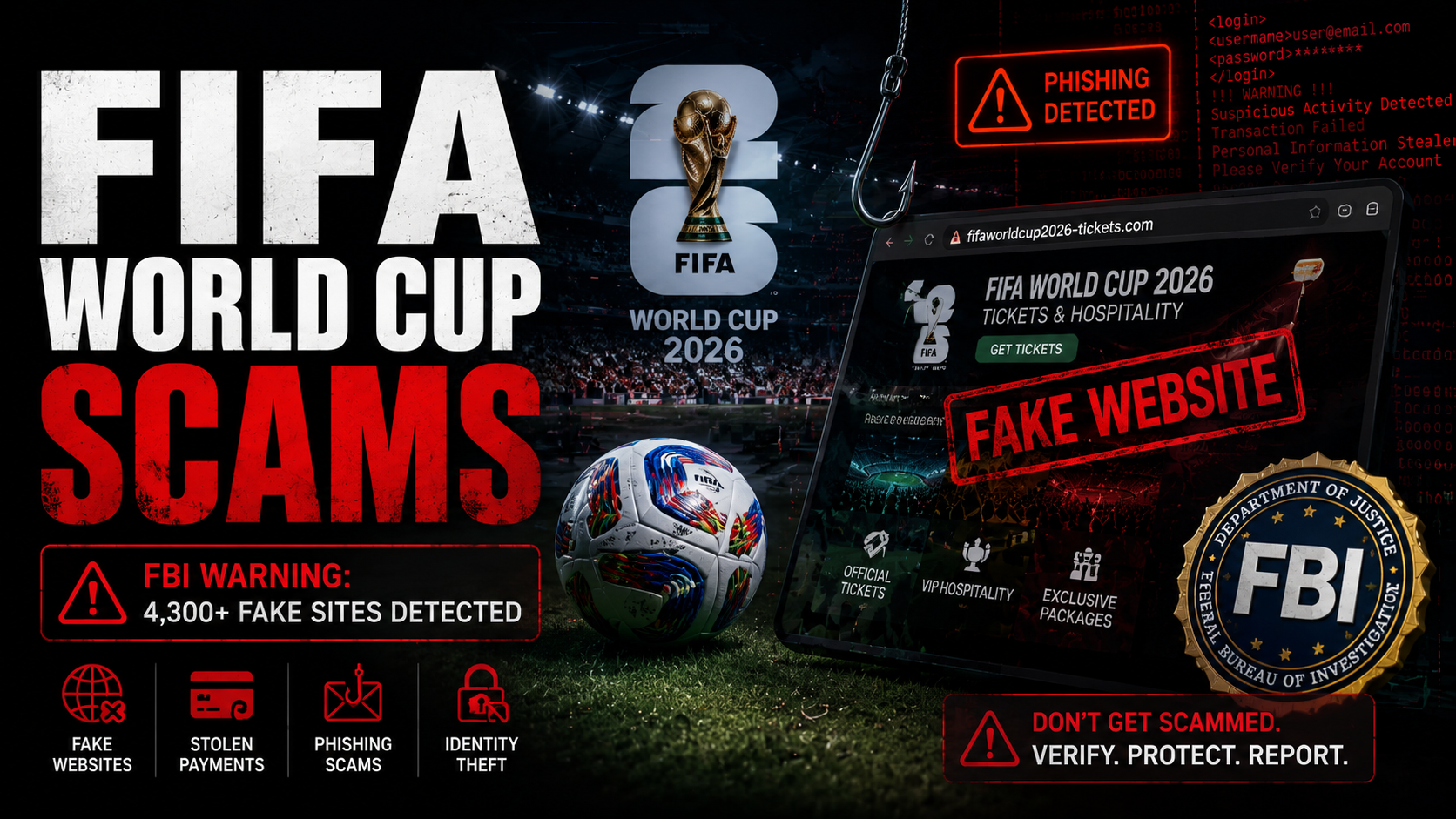
The World Cup hasn’t even kicked off yet and cybercriminals are already winning. The FBI just issued a Public Service Announcement warning that over 4,300 fake FIFA domains are actively targeting fans with ticket scams, identity theft, and banking malware. Security researchers at Group-IB estimate total losses could reach into the billions of dollars.
If you’re planning to attend, stream, or bet on the 2026 FIFA World Cup, you’re a target. Here’s what the FBI and security researchers have found — and how to avoid becoming a victim.
FBI Issues World Cup Cyber Warning
The FBI’s Internet Crime Complaint Center (IC3) published PSA 260527 on May 27, 2026, warning that threat actors are conducting spoofing attacks against the FIFA website in advance of the 2026 World Cup, which is being hosted across the United States, Mexico, and Canada starting June 11.
The timing is deliberate. With millions of fans worldwide searching for tickets, travel information, schedules, and merchandise, cybercriminals are casting an enormous net. The FBI specifically warns against using search engines to find FIFA’s website — sponsored search results can be paid imitators designed to steal personal information.
Instead, the FBI recommends typing fifa.com directly into your browser’s address bar. If that sounds like overly basic advice, consider this: the fake domains are sophisticated enough that even tech-savvy users are being fooled.
4,300+ Fake FIFA Domains Already Active
Group-IB, a global cybersecurity firm, has identified over 4,300 spoofed FIFA-related domains registered by threat actors. These aren’t crude knockoffs — they use domain impersonation and typo-squatting techniques that closely mimic legitimate FIFA URLs.
Examples of typo-squatting techniques include substituting similar-looking characters (fifa2026.com vs f1fa2026.com), adding plausible prefixes or suffixes (fifatickets2026.com, fifa-worldcup.net), and using alternative top-level domains (.org, .net, .info instead of .com).
These domains host everything from fake ticket sales pages to merchandise shops, all designed to harvest personal information including names, home addresses, phone numbers, email addresses, and — most critically — banking information and credit card numbers.
The 5 Most Common World Cup Scams
Security researchers have categorized the FIFA-themed attacks into five primary categories:
1. Fake Ticket Sales: Spoofed websites mimicking FIFA’s official ticketing platform. Users enter payment information and receive nothing — or worse, receive convincing-looking fake tickets that get them turned away at the venue. Group-IB estimates ticket fraud alone could cost fans between $71 million and $474 million.
2. Counterfeit Merchandise: Fake online stores selling jerseys, scarves, and memorabilia that either never arrive or are knock-offs. These sites look professional with stolen FIFA branding, product photos, and even fake customer reviews.
3. Bogus Streaming Sites: Websites promising free or cheap World Cup streaming that require a “subscription” fee — and then install malware on the user’s device. These are particularly dangerous because they combine financial theft with device compromise.
4. Fake Betting Platforms: Fraudulent sports betting sites that collect passport scans and selfies for “identity verification” — data that’s then used for identity theft. Some platforms even allow users to place bets and show “winnings” before making withdrawal impossible.
5. Employment Scams: Fake FIFA job listings and volunteer opportunities that harvest personal information from applicants, including Social Security numbers and background check data.
Banking Malware Hidden in Streaming Apps
Perhaps the most technically sophisticated threat is banking malware disguised as World Cup streaming apps. These apps, distributed through third-party app stores and social media links, promise free access to all World Cup matches.
Once installed, the apps request permissions that seem reasonable for a streaming app — screen overlay, accessibility services, notification access. But these permissions allow the malware to intercept banking app credentials, capture SMS-based two-factor authentication codes, and even initiate fraudulent transactions directly from the victim’s device.
The malware is sophisticated enough to detect when users open legitimate banking apps and overlay convincing fake login screens. Victims think they’re logging into their bank — they’re actually feeding their credentials to attackers.
This technique has been seen in previous major cyber attack campaigns but is being deployed at unprecedented scale for the World Cup.
Billions at Stake: The Scale of the Threat
Group-IB estimates that the total financial impact of World Cup-themed cybercrime could reach billions of dollars. The breakdown is sobering:
| Scam Category | Estimated Impact |
|---|---|
| Ticket Fraud (premium/hospitality) | $71M – $474M |
| Banking Malware (streaming apps) | $500M+ (est.) |
| Counterfeit Merchandise | $100M+ (est.) |
| Identity Theft (betting/jobs) | $200M+ (est.) |
| Phishing/Credential Theft | $100M+ (est.) |
The 2026 World Cup is the first to be hosted across three countries with 48 teams — the largest in FIFA history. That expanded footprint means more venues, more travel, more ticket demand, and consequently more attack surface for cybercriminals.
How to Protect Yourself
The FBI and cybersecurity researchers recommend several precautions:
Go directly to fifa.com. Type the URL directly into your browser’s address bar. Don’t click links from emails, social media, or search engine sponsored results. Even organic search results can be poisoned with spoofed domains.
Buy tickets only through official FIFA channels. FIFA’s official ticketing platform is the only legitimate source for World Cup tickets. Third-party resellers and marketplace listings are high-risk.
Never download streaming apps from unofficial sources. If an app isn’t available on the Apple App Store or Google Play Store, don’t install it. Even on official stores, verify the developer’s identity and read reviews carefully.
Use credit cards, not debit cards. Credit cards offer better fraud protection and dispute resolution. If your card information is stolen, a credit card limits your liability in ways that debit cards often don’t.
Enable multi-factor authentication on everything. Your email, banking apps, social media, and FIFA account should all have MFA enabled. Use authenticator apps rather than SMS-based 2FA when possible, as SMS codes can be intercepted.
Be skeptical of deals that seem too good to be true. If someone’s offering face-value tickets to the World Cup Final on social media, it’s almost certainly a scam. Premium tickets for major matches are sold out through official channels.
Why Major Events Are Cybercrime Goldmines
The World Cup follows a pattern seen with every major global event. The Olympics, Super Bowl, and Champions League all attract waves of cybercrime because they create the perfect conditions: urgency, emotion, and unfamiliar digital environments.
Fans are excited and eager to buy tickets or merchandise quickly. They’re navigating unfamiliar websites and apps. They’re making financial decisions under time pressure. And they’re less likely to verify legitimacy when they think they’ve found a great deal.
Cybercriminals know this. They prepare months in advance, registering domains, building convincing fake sites, and developing malware tailored to the event. By the time the first match kicks off, the criminal infrastructure is fully operational.
The Bottom Line
With over 4,300 fake FIFA domains already active and billions of dollars at stake, the 2026 World Cup is shaping up to be the biggest cybercrime event in sports history. The FBI’s warning is clear: assume every World Cup-related link, email, and app is a potential threat until proven otherwise.
Go directly to fifa.com. Buy only through official channels. Don’t download random streaming apps. And if a deal seems too good to be true, it’s a scam. Period.
Stay safe online with SudoFlare cybersecurity coverage.