Chinese AI Models Now Control 60% of Global Token Usage — And American AI Labs Should Be Terrified
Table of Contents
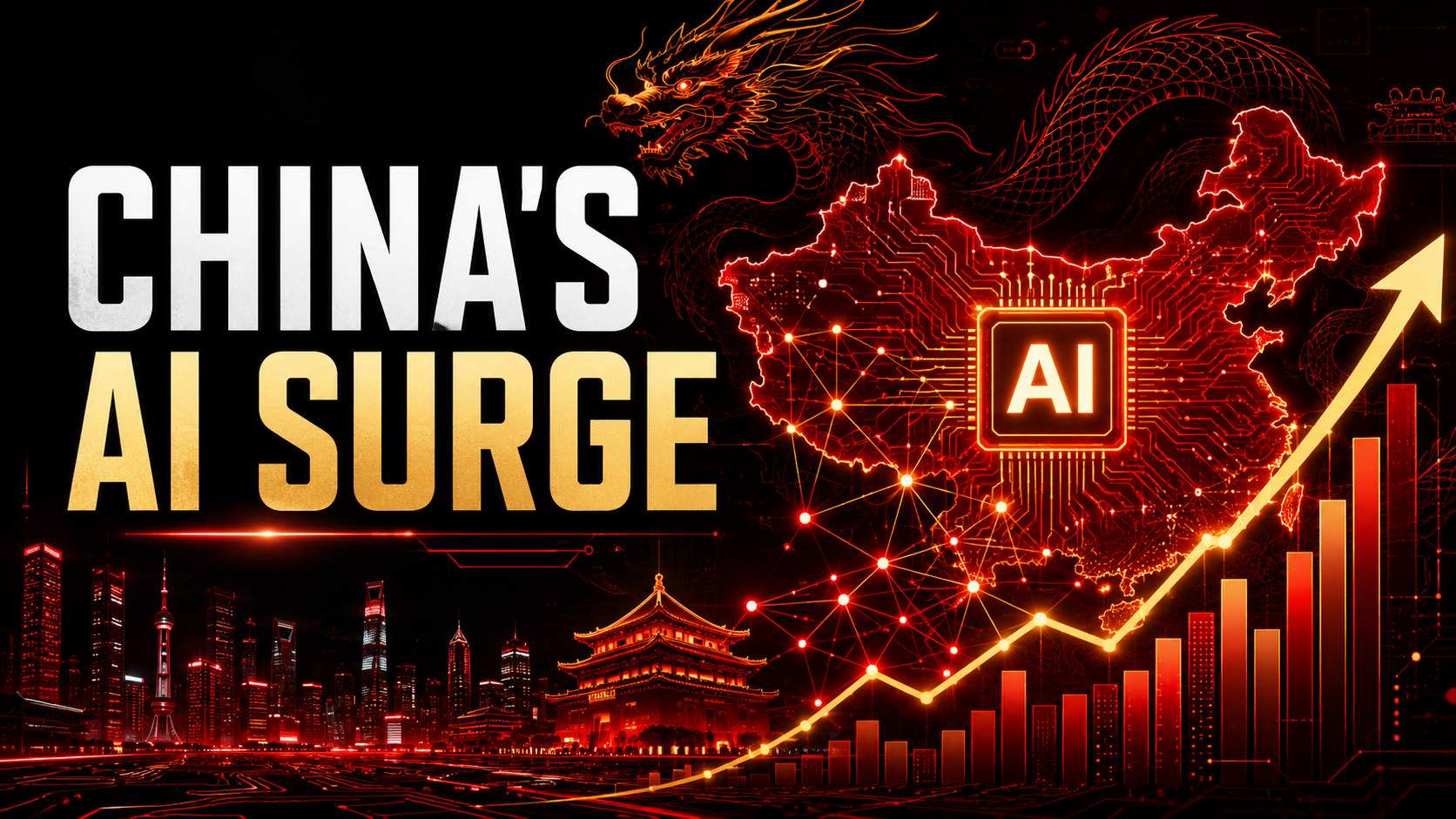
Here’s a statistic that should keep Sam Altman and Dario Amodei awake at night: Chinese AI models now account for more than 60% of all token usage on OpenRouter, one of the largest AI model routing platforms in the world.
In 2024, that number was approximately 1%.
In 18 months, Chinese AI labs went from afterthought to dominant market force. And the reason is devastatingly simple: they’re 10 to 20 times cheaper than American alternatives.
The Numbers Don’t Lie
According to OpenRouter data from February and March 2026, Chinese models account for approximately 61% of total token consumption among the ten most-used models on the platform. The leading model is MiniMax M2.5, which consumed 2.45 trillion tokens in a single week.
To put that in perspective: the models people are actually using at scale are no longer called GPT or Claude. They’re called GLM, MiniMax, and Kimi.
Databricks CEO Ali Ghodsi, whose company’s AI gateway sits between thousands of enterprise customers and the models they use, confirmed the shift. He has a real-time view of which models enterprises are actually paying for — and the trend is unmistakable.
How This Happened in 18 Months
The story starts with DeepSeek’s January 2025 release of R1, an open-weight reasoning model that matched OpenAI’s o1 at a fraction of the cost. That single release shattered the assumption that cutting-edge AI required billions of dollars in compute.
What followed was an avalanche. Chinese labs — MiniMax, Moonshot (Kimi), Zhipu (GLM), Alibaba (Qwen), ByteDance (Doubao), and DeepSeek itself — released a rapid-fire sequence of models that were competitive with or better than Western alternatives in coding, reasoning, and agent-driven workflows.
And they priced them at pennies on the dollar.
The Price War America Is Losing
The core of the Chinese AI advantage is price. Chinese models are 10 to 20 times cheaper than leading American alternatives, depending on the comparison. Here’s a rough breakdown:
- GPT-4-class output: OpenAI charges ~$10-30 per million tokens. Chinese alternatives: ~$0.50-2.
- Coding tasks: Claude Sonnet pricing vs. DeepSeek Coder: roughly 15x difference.
- Reasoning tasks: OpenAI o3 vs. DeepSeek R2: roughly 10x difference.
These aren’t inferior models being sold at a discount. In many benchmarks, particularly coding and agent workflows, Chinese models are competitive or superior. You’re getting roughly the same quality for a fraction of the price.
The Advisor Model: How Enterprises Actually Use AI
Ghodsi described what he calls the “advisor model” approach now spreading through enterprise: companies use cheap open-source or Chinese models as the default layer and only call OpenAI or Anthropic for tasks those models cannot solve.
Think of it like a law firm. You don’t send every question to your most expensive partner. You have paralegals and junior associates handle routine work, and escalate to the partner only when necessary.
In practice, this means 80-90% of an enterprise’s AI workload runs on cheap Chinese models, with American frontier models used only for the hardest 10-20%. This dramatically reduces costs while maintaining quality where it matters.
The implications for American AI labs’ revenue are obvious — and troubling.
The IPO Problem
This shift couldn’t come at a worse time. Both OpenAI (targeting September 2026, ~$1 trillion valuation) and Anthropic (targeting October 2026, ~$900 billion valuation) are racing toward massive IPOs.
These valuations assume continued revenue growth and market dominance. But if enterprises are routing 80% of their token volume to models that cost 10-20x less, the revenue projections underpinning those valuations start to look shaky.
As CNBC reported, “Cheap AI could derail OpenAI and Anthropic’s IPOs.” The concern isn’t that Chinese models are better — it’s that they’re good enough at a fraction of the price. And “good enough at 1/10th the cost” beats “best at full price” in almost every enterprise buying decision.
Who Is Winning: The Chinese AI Labs
The key Chinese AI players dominating the market include:
- MiniMax — M2.5 is the #1 most-used model on OpenRouter by token volume
- Moonshot AI (Kimi) — K2.5 is among the top 5 most-used models globally
- DeepSeek — The company that started the price war with R1 in January 2025
- Alibaba (Qwen) — The open-weight Qwen family has massive enterprise adoption
- Zhipu AI (GLM) — China’s answer to Anthropic, with strong reasoning capabilities
The Quality Question
American AI labs argue that their models are still superior for the most demanding tasks — complex reasoning, nuanced writing, and safety-critical applications. And they’re right. Claude Mythos and GPT-5 remain the gold standard for frontier capability.
But the market doesn’t care about the gold standard if silver is 95% as good at 5% of the price. The history of technology is littered with examples of “good enough” products beating superior ones on price. Linux vs. Unix. Android vs. iOS (in emerging markets). MySQL vs. Oracle.
The same dynamic is now playing out in AI, and American labs aren’t adapting fast enough.
What This Means for the AI Industry
The Chinese AI model surge has several major implications. AI model pricing will crash across the board. OpenAI and Anthropic will be forced to cut prices dramatically or risk losing even more market share.
The “moat” for AI companies is shifting from model quality to platform and ecosystem. If any model can do 90% of tasks, the value is in the tools, infrastructure, and integrations built around the model — not the model itself.
Open-source will accelerate. The success of Chinese open-weight models proves that open models can compete with proprietary ones. This will push more companies to release open weights, further commoditizing the base model layer.
Geopolitical tension will increase. The US government is already scrutinizing Chinese AI usage in American enterprises. Expect new regulations, export controls, and possibly bans on Chinese AI models in sensitive sectors.
The Bottom Line
The AI market is following the same pattern as every other technology market before it: commoditization. What was once cutting-edge becomes a commodity. What was once expensive becomes cheap. What was once American becomes global.
Chinese AI labs went from 1% to 60%+ market share in 18 months. That’s not a trend — it’s a tectonic shift. And it’s happening while OpenAI and Anthropic are trying to convince investors they’re worth a combined $2 trillion.
The numbers don’t add up. Either the American AI labs find a way to justify their premium, or the largest IPOs in history will be priced on assumptions that the market has already disproven.