This $1B Security Startup Is Silently Blocking Nation-State Hackers From Your Code — Socket Raises $60M in 2026
The Security Company Blocking Over 1,000 Attacks a Week That Nobody’s Talking About
Somewhere in the dependency tree of your application, there might be a malicious package waiting to exfiltrate credentials, install a backdoor, or wipe your build pipeline. You almost certainly don’t know it’s there. Your security scanner probably doesn’t either.
That’s the problem Socket has been quietly solving since 2020 — and as of this week, the market has officially declared it worth $1 billion. Socket raised $60 million in Series C funding, led by Thrive Capital with participation from Andreessen Horowitz, Abstract Ventures, and Capital One Ventures, bringing the company’s total funding to $125 million.
The raise comes at a critical moment: software supply chain attacks have surged to account for nearly 48% of all data breaches in 2026, according to the Verizon DBIR. The attack surface keeps expanding as AI-generated code, autonomous coding agents, and open-source libraries maintained by anonymous contributors flood into enterprise applications at unprecedented speed.
What Socket Actually Does — and Why Traditional Tools Miss It
Traditional software composition analysis (SCA) tools work by checking whether the packages in your project match a list of known vulnerabilities. They scan your package.json or requirements.txt, query a CVE database, and flag anything with a known CVE number.
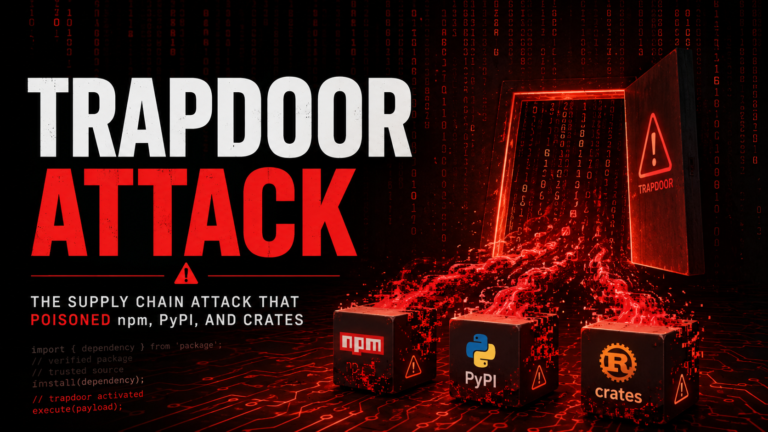
The problem: supply chain attacks increasingly bypass this model entirely. Attackers don’t introduce vulnerabilities into existing packages that will get CVE numbers and show up in databases. Instead, they:
- Typosquat: publish packages with names nearly identical to popular packages (e.g.,
loadshinstead oflodash), containing malicious code that runs at install time - Compromise maintainer accounts: take over legitimate, well-trusted packages and push malicious updates that existing versions never had
- Add malicious behavior to new versions: introduce data exfiltration or backdoor code in a minor version bump that passes automated dependency updates
- Create dependency confusion attacks: exploit how package managers prioritize public vs. private registry versions to inject malicious code
None of these attack techniques generate CVE numbers. None appear in vulnerability databases until after they’ve already compromised thousands of projects. Traditional SCA tools miss them completely.
Socket’s approach is different: rather than checking against databases of known issues, Socket analyzes the behavior of packages — what they actually do when installed and at runtime. Does this package try to access the network? Read environment variables? Execute shell commands? Modify the filesystem? Call home to an external server?
Socket flags these behavioral indicators in real time, before the package is downloaded into your build environment. According to the company, this approach blocks over 1,000 attacks weekly across its customer base — attacks that would have sailed past every CVE scanner in the market.
How Socket Ended Up Blocking Nation-State Hackers
Bloomberg’s coverage of the funding round highlighted something unusual: Socket has positioned itself as a tool for blocking nation-state hackers. That’s not typical startup marketing language — it reflects the actual threat landscape that software supply chain security now operates in.
State-sponsored threat actors from North Korea, China, Iran, and Russia have all been linked to software supply chain attacks in the past two years. North Korean hackers in particular have run systematic campaigns to infiltrate open-source projects, insert themselves as legitimate contributors, and then push malicious commits that steal cryptocurrency or establish persistent access to enterprise environments.
These aren’t script kiddies running automated tools — they’re sophisticated operators who understand how to bypass traditional security controls. The fact that Socket’s behavioral analysis is detecting and blocking these attacks is a significant validation of the approach.
The company’s blocklist and threat intelligence feeds now cover not just npm packages but PyPI, Go modules, Maven, and NuGet — the major language ecosystems that form the dependency layer of essentially all enterprise software. As AI coding agents like those built with modern AI frameworks increasingly auto-suggest and auto-install dependencies, the risk of AI-assisted supply chain infiltration grows alongside Socket’s relevance.
The Socket Firewall: From Detection to Prevention
The $60 million raise has a specific product roadmap attached to it. Socket recently launched the Socket Firewall — a system designed to block malicious packages before they can reach developer environments or CI/CD pipelines at all, rather than just alerting on them after installation.
The firewall approach is important because alerts without prevention don’t actually stop attacks. A developer who installs a malicious package and gets an alert after the fact has already executed malicious code. The damage may already be done. By blocking at the firewall layer — intercepting package download requests and refusing to serve packages that fail behavioral analysis — Socket closes the window between detection and harm.
New funding will also support certified patches — Socket-verified fixes for vulnerable open-source packages that enterprise customers can apply with confidence that the patch itself hasn’t been tampered with. This addresses a nasty secondary problem: sometimes the patches for vulnerable packages are themselves compromised, or arrive faster than security teams can validate them.
Why This Matters Particularly Right Now
The timing of Socket’s raise and the scale of its traction reflect a specific moment in the software development lifecycle: AI code generation has made developers dramatically more productive, but it’s also massively accelerated the consumption of open-source dependencies.
When a developer asks Claude Code or GitHub Copilot to “add user authentication to this app,” the AI doesn’t write authentication from scratch — it suggests and often auto-imports popular authentication libraries. When it scaffolds a new project, it pulls in dozens of dependencies automatically. The developer may never consciously evaluate those packages.
This creates an unprecedented dependency ingestion rate at the organizational level. Enterprises that used to add 5-10 new packages per quarter are now adding hundreds as AI-accelerated development teams ship faster. The attack surface grows proportionally — and the human review that traditionally served as a quality gate is being bypassed entirely.
This is precisely the context the Verizon DBIR’s supply chain attack findings describe. Organizations aren’t being breached because their own code is bad — they’re being breached through the code of vendors, open-source maintainers, and automated dependency updates they never explicitly approved.
Why Thrive Capital Led This Round
Thrive Capital, the venture firm founded by Josh Kushner, doesn’t make many Series C bets at $1 billion valuations. When it does, the pattern is usually a company that has found exceptional product-market fit in a market that’s about to get materially larger. OpenAI, Stripe, GitHub — Thrive’s portfolio reflects bets on infrastructure that becomes foundational.
Socket’s inclusion in that category signals that Thrive believes software supply chain security is moving from “niche concern of security-conscious development teams” to “table stakes for any enterprise shipping software.” The $1 trillion annual cost of cybercrime, combined with the specific supply chain attack trajectory, makes that a reasonable thesis.
Andreessen Horowitz’s continued participation (a16z was an earlier investor) further validates the bet. a16z has been aggressive on security infrastructure investments throughout 2025-2026, reflecting a view that the AI era creates as many security problems as it solves — and that the companies solving those problems have exceptional leverage.
Socket is small enough that most of the tech industry hasn’t heard of it. Its work happens in the infrastructure layer — in CI/CD pipelines, package registries, and dependency graphs — far from the consumer-facing interfaces that generate headlines. But if you’re writing software in 2026, Socket is either protecting your supply chain or it isn’t. Given the current threat landscape, the difference between those two states could be the difference between a secure organization and a breached one.
A $1 billion valuation for a company blocking nation-state hackers from your node_modules folder sounds like a lot. In 2026’s threat environment, it might be a bargain.