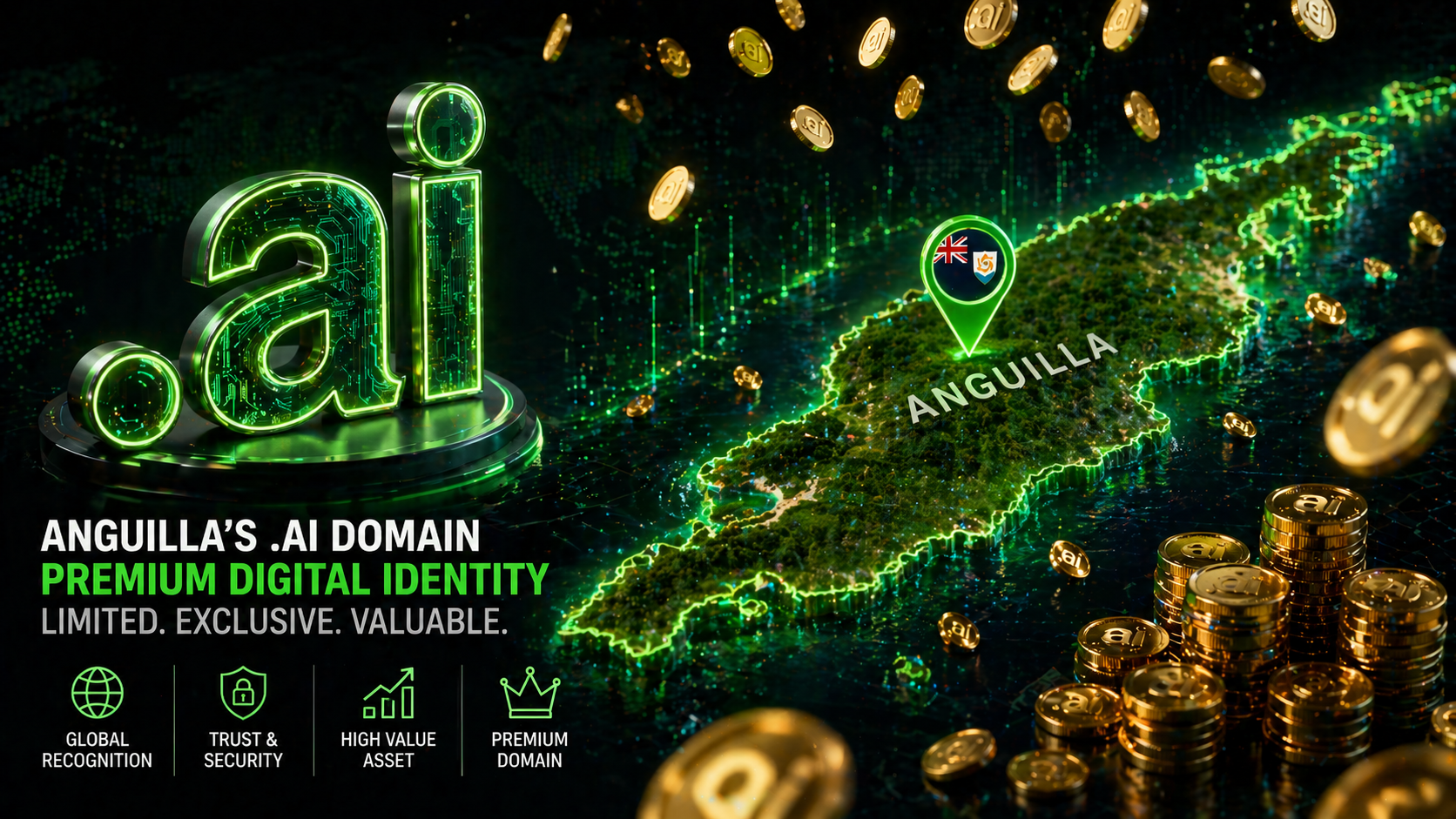
How the .ai Domain Turned Anguilla Into a $39M Tech Goldmine in 2026
Table of Contents
In one of the most remarkable stories in internet history, a tiny Caribbean island with fewer than 19,000 residents has become one of the biggest financial beneficiaries of the global artificial intelligence revolution. The .ai domain Anguilla 2026 phenomenon has turned what was once an obscure country code extension into a multi-million dollar revenue engine, pouring unprecedented wealth into a nation that most people could not point to on a map just five years ago.
This is not a story about coding or machine learning algorithms. This is a story about geography, serendipity, and the extraordinary Anguilla economy technology windfall that has fundamentally transformed how a small island nation finances its public services, builds its infrastructure, and plans for its future. Understanding how this happened requires looking at the intersection of internet naming conventions, the explosive growth of AI, and the global demand for domain names that signal cutting-edge credibility.
What Is the .ai Domain Anguilla 2026 Story?
The .ai domain is officially the country code top-level domain (ccTLD) assigned to Anguilla, a British Overseas Territory in the northeastern Caribbean Sea. Like .uk for the United Kingdom or .au for Australia, .ai was originally created as a geographic identifier for websites based in Anguilla. When it was first established, few outside the island paid it any attention — there was almost no demand for an obscure Caribbean territory’s domain extension.
Everything changed with the rise of artificial intelligence as the dominant technological paradigm of the 2020s. Companies, startups, and developers scrambled for domain names that immediately communicated an association with AI. The .ai domain Anguilla 2026 situation is the culmination of years of accelerating demand. Crucially, Google classified .ai as a generic top-level domain rather than a country-specific one, meaning websites using it face no penalties in global search rankings — a decision that supercharged its international appeal.
How Anguilla Struck Gold: The .ai Domain Anguilla 2026 Origin Story
The story of how Anguilla ended up controlling one of the internet’s most sought-after extensions is a combination of historical accident and extraordinary good fortune. When the Internet Assigned Numbers Authority distributed country code top-level domains in the early internet era, every recognized territory received one based on its ISO 3166-1 alpha-2 country code. Anguilla’s code happens to be “AI” — two letters that, decades later, would become the universal shorthand for an entire technological revolution.
In the early years, .ai domain Anguilla 2026 registration numbers were relatively modest. The extension sat dormant with registrations numbering in the thousands. Then, as AI startups proliferated and investors poured billions into machine learning ventures, the .ai extension suddenly represented something far more valuable than its original geographic purpose. Companies like Google (google.ai) and Meta (facebook.ai) rushed to secure .ai addresses, triggering a registration boom that continues to accelerate today.
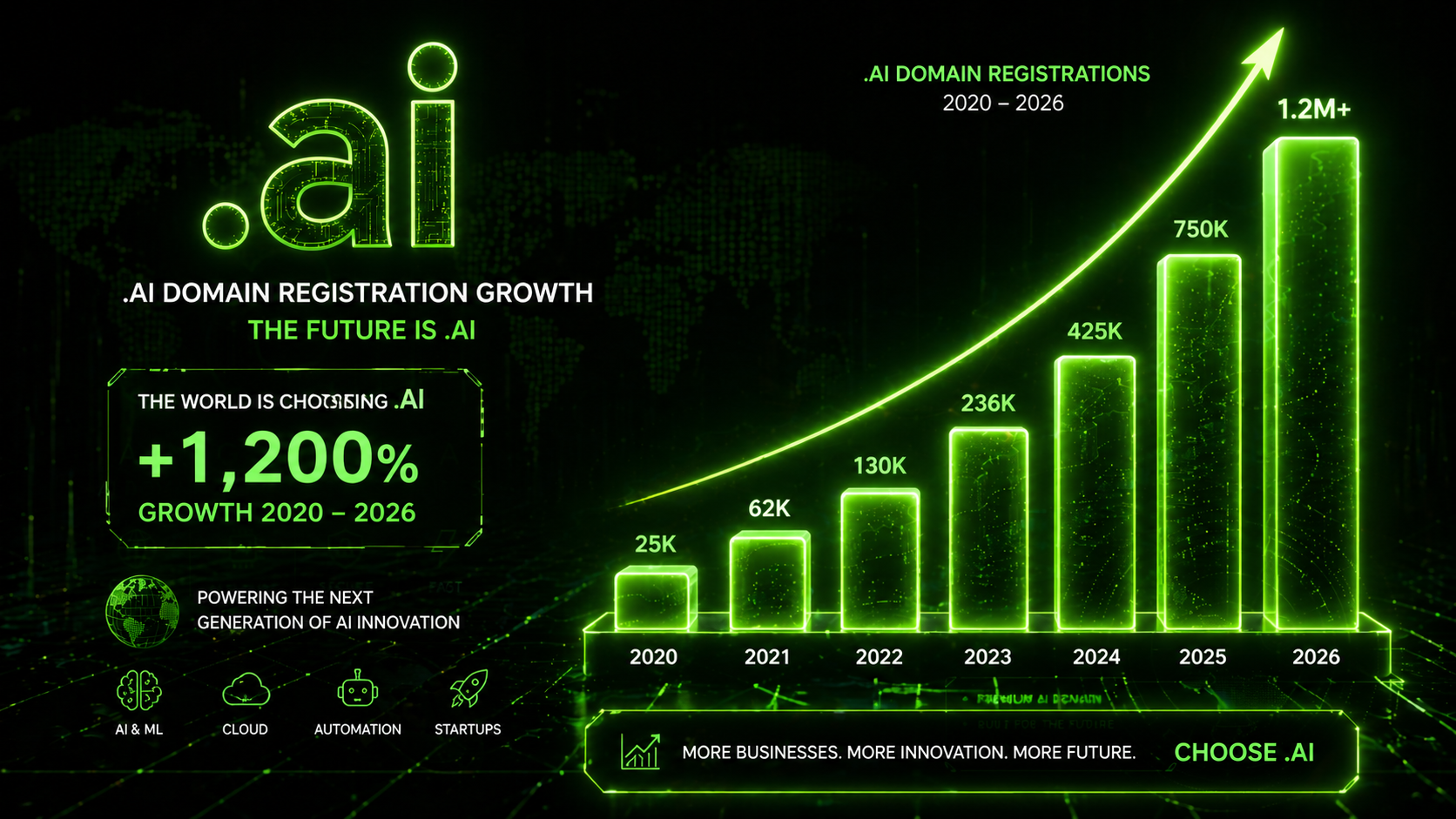
Breaking Down the $39M Anguilla Economy Technology Windfall
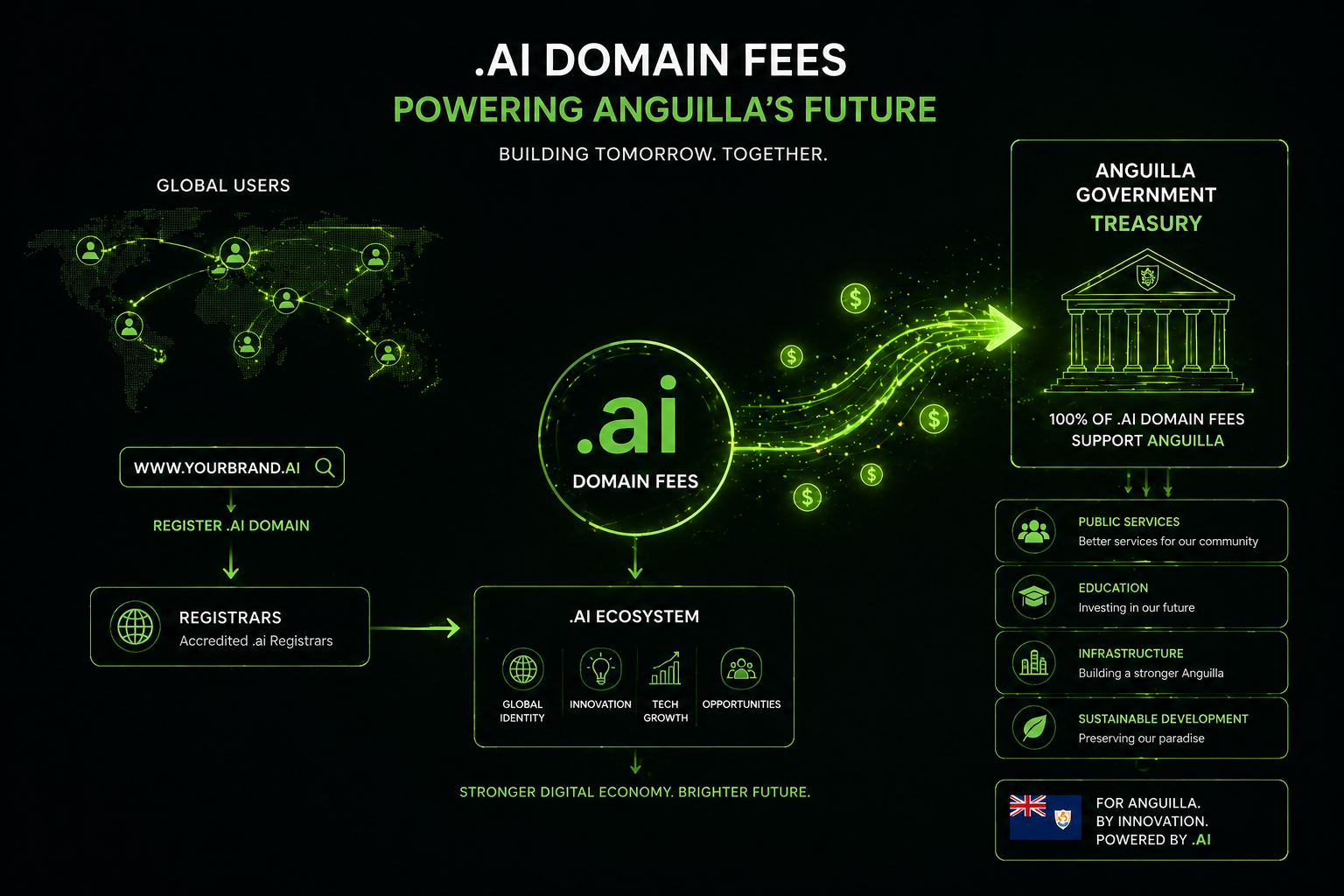
The financial scale of the Anguilla economy technology windfall is staggering when measured against the island’s overall economic size. In 2024, .ai domain registrations generated approximately $39 million for the government — a figure that represents between 25% and 47% of Anguilla’s total national budget. For context, this is equivalent to a mid-sized country suddenly discovering an entirely new revenue stream that rivals its most established industries overnight.
The revenue model is straightforward: every time someone registers or renews a .ai domain, a portion of the fee flows directly to the Government of Anguilla. Registration costs typically run between $140 and $200 for a two-year term — significantly more expensive than standard .com registrations. All .ai domain Anguilla 2026 registrations require a minimum two-year commitment, creating a predictable, recurring revenue stream that planners can model years in advance.
Premium .ai domain auctions add another layer to the Anguilla economy technology windfall. High-value short names have sold for extraordinary sums — the domain you.ai reportedly sold for $700,000, with the majority of proceeds flowing directly to the island’s treasury. As long as artificial intelligence remains the defining technology of our era, demand for .ai addresses — and the windfall for Anguilla — shows no signs of slowing.
Who Is Registering .ai Domains? The Anguilla Economy Technology Windfall Beneficiaries
The vast majority of .ai domain registrants have absolutely no connection to Anguilla. The island’s 19,000 residents account for a tiny fraction of active registrations. Instead, the registrant base is dominated by AI startups seeking immediate brand recognition, established technology giants protecting their brand identity in the AI space, research institutions publishing AI-related findings, and individual developers building AI-powered tools and applications around the world.
The .ai domain Anguilla 2026 appeal spans every segment of the technology industry. Early-stage startups use .ai domains to immediately signal their focus to investors and customers. Fortune 500 companies register defensive .ai addresses to protect their trademarks. Even government agencies and academic institutions are now acquiring .ai domains to signal their engagement with artificial intelligence research and policy. Every single one of these registrations generates revenue for the Anguilla economy technology windfall fund.
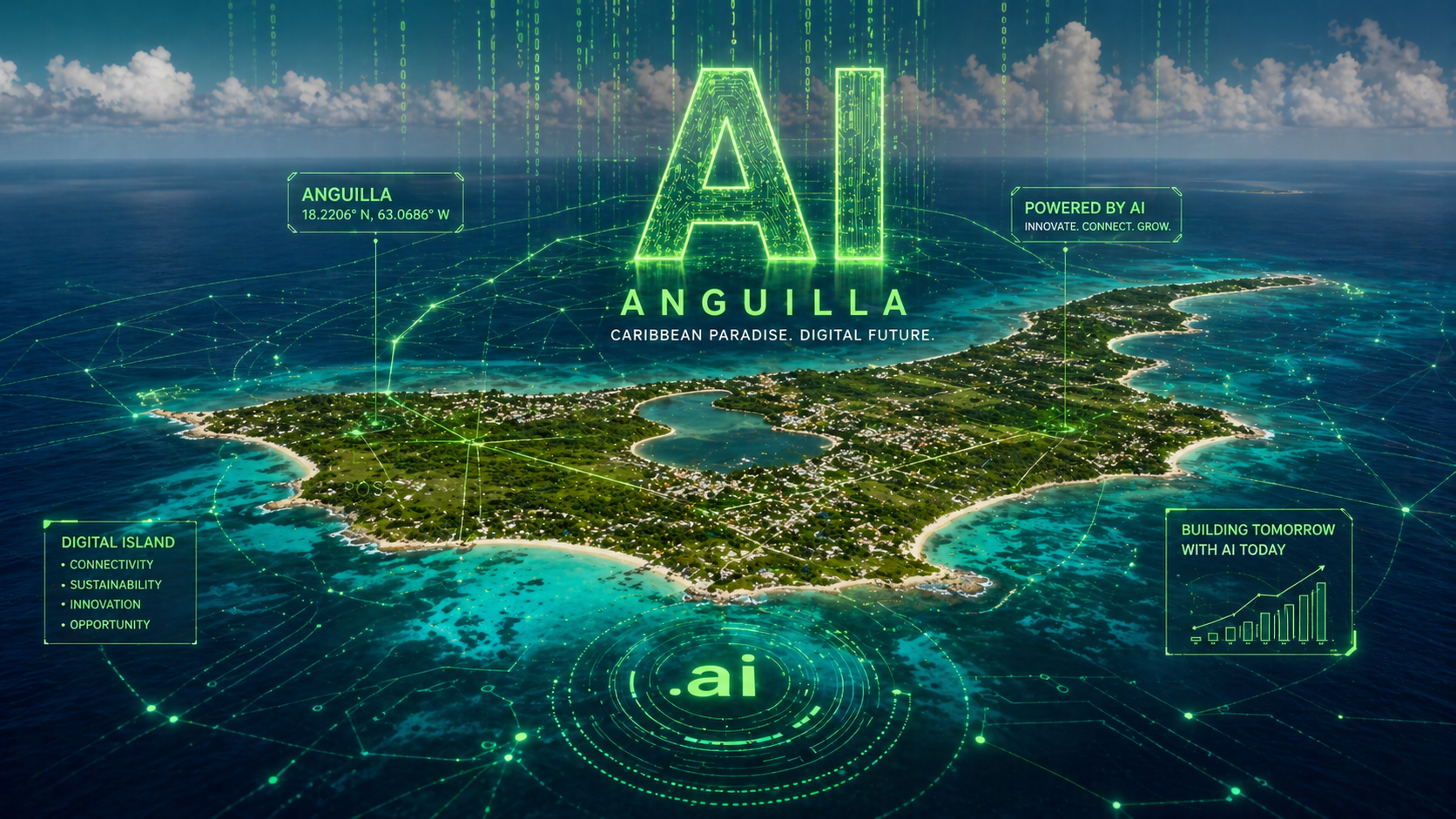
How the Anguilla Economy Technology Windfall Is Spent
The practical impact of the .ai domain Anguilla 2026 revenue on life on the island has been significant and tangible. The government has channeled the windfall into a comprehensive public investment program. Infrastructure upgrades have been a priority, with major investments flowing into airport expansion, road improvement, and upgrades to water and electrical systems that will benefit residents and the tourism industry for decades to come.
Healthcare is another major beneficiary of the Anguilla economy technology windfall. The government has used domain revenue to fund free healthcare for children under five and citizens aged 70 and older. Education spending has also accelerated, with funds allocated to complete new schools and a vocational training center. The government is also paying down national debt — reducing vulnerability to future economic shocks from hurricanes or global recessions. The .ai domain Anguilla 2026 revenue stream has effectively allowed multi-decade investments in a matter of years.
Verisign, ICANN, and the Technical Side of .ai Domain Anguilla 2026
While revenue flows to Anguilla, technical management of the .ai domain is handled by external organizations. Identity Digital (formerly Donuts), a U.S.-based registry operator, manages the technical infrastructure and receives approximately 10% of registration revenue for its services. The Internet Corporation for Assigned Names and Numbers (ICANN) provides oversight of the global domain name system and sets the policy framework within which the registry operates.
This structure means the Anguilla government does not need to maintain sophisticated technical infrastructure to benefit from the .ai domain Anguilla 2026 revenue. It receives passive income from every registration and renewal processed through the global network of domain registrars. The Anguilla economy technology windfall is, in this sense, a genuinely passive income model — an extraordinary position for any government to find itself in.
.ai vs .com: Which Domain Should You Choose in 2026?
For businesses choosing between .com and .ai in 2026, the decision involves weighing brand perception against cost and availability. The .com extension remains the most recognized domain globally with over 157 million registrations. However, for companies specifically working in artificial intelligence, machine learning, or related fields, the .ai domain offers an immediate signal of relevance and specialization that .com simply cannot provide.
From an SEO standpoint, Google’s decision to treat .ai as a generic domain removes historical objections to country code domains for international businesses. The primary drawbacks of .ai remain the higher registration cost — typically three to four times more expensive than .com — and the mandatory two-year minimum term. For AI-focused businesses, these costs are widely considered worthwhile. Every purchase also contributes to the .ai domain Anguilla 2026 economy, making it a choice with a positive global impact.
How to Register a .ai Domain: A Practical 2026 Guide
Registering a .ai domain in 2026 is straightforward through any major registrar offering the extension. Search for your desired name, complete the purchase, and note the mandatory two-year minimum commitment. Most registrars charge between $140 and $200 for initial registration, with renewal at similar rates. Popular options include GoDaddy, Namecheap, Porkbun, and Google Domains — each with different pricing and bundled features like privacy protection and DNS management.
There are no location or business-type restrictions on .ai registrations — anyone worldwide can acquire a .ai domain with no requirement to have any connection to Anguilla. This openness has been central to the .ai domain Anguilla 2026 growth story. The absence of bureaucratic barriers keeps registration volumes high and the Anguilla economy technology windfall flowing. Comparing prices across registrars before purchasing is advisable, as costs can vary by $20–$40 per registration.
The Future of the .ai Domain Anguilla 2026 Revenue Model
The outlook for the .ai domain Anguilla 2026 revenue stream remains exceptionally positive. Analysts tracking domain registration trends expect continued growth as artificial intelligence moves deeper into mainstream commercial applications. Every new AI startup, every corporate AI initiative, and every developer building AI-powered tools represents a potential new .ai registration — and recurring renewal revenue for Anguilla every two years.
Government officials are working to ensure the Anguilla economy technology windfall is channeled into investments that will benefit the island even if AI boom eventually plateaus. Sovereign wealth fund structures, infrastructure bonds, and education endowments are among the mechanisms being considered to convert today’s domain revenues into lasting generational wealth. The .ai domain Anguilla 2026 opportunity is historic — the question is whether it will be managed with equal vision.
Risks and Challenges Facing the Anguilla Economy Technology Windfall
Despite the extraordinary success story, Anguilla’s financial planners are keenly aware of the inherent risks. The enormous value of .ai is entirely dependent on the continued cultural dominance of “AI” as shorthand for artificial intelligence. If the industry adopted different terminology, or if a competing extension captured the tech sector’s imagination, .ai demand could soften significantly. The .ai domain Anguilla 2026 windfall is not guaranteed in perpetuity.
Natural disaster risk is another pressing concern. Anguilla sits in a hurricane-prone region of the Caribbean, and major storms have historically caused severe economic disruption. Diversifying the island’s economic base — using the Anguilla economy technology windfall to build tourism infrastructure, attract financial services, and develop new industries — remains a government priority. The domain revenue provides a historic opportunity to build resilience, but only if managed wisely rather than consumed entirely by recurring operating expenses.
Conclusion: A Small Island, A Global Revolution
Comparing .ai With Other Tech-Favourite Country Domains
While Anguilla’s .ai extension is the most dramatic current example of a country code domain being repurposed for global tech branding, it is far from unique. The .io extension — officially assigned to the British Indian Ocean Territory — became popular among tech startups in the 2010s and continues to generate revenue for that territory’s administration. Similarly, the .co extension (Colombia) gained traction as a .com alternative, and .dev (originally unassigned) was later purchased by Google to serve the developer community.
What makes the Anguilla situation uniquely powerful is the perfect alignment between the country code and the defining technology of the current era. While .io and .co simply look like abbreviations, .ai is the actual, universally recognized acronym for artificial intelligence — not a coincidence or a creative stretch, but a genuine semantic match. This gives the .ai domain an authenticity and staying power that other repurposed country codes lack. Businesses using .ai are not just picking a memorable extension; they are aligning their brand with the most important technology trend of the 21st century.
The Global Economic Lessons From the Anguilla Domain Story
The Anguilla story offers broader lessons for small nations and territories navigating the digital economy. In an era where physical geography increasingly matters less than digital positioning, even the smallest jurisdiction can find itself holding assets of enormous global value. The key insight is that the value of these digital assets — domain extensions, data rights, digital infrastructure concessions — is often not obvious at the time they are assigned, making proactive policy and careful stewardship essential.
For policymakers in developing nations, the Anguilla example demonstrates the importance of diversifying revenue sources and embracing the digital economy rather than treating it as an afterthought. Countries and territories that own potentially valuable digital assets — whether domain extensions, satellite orbital slots, or spectrum rights — would be wise to study how Anguilla has maximized the value of its two-letter country code. The lesson is clear: in the digital age, even the smallest jurisdictions can punch far above their weight if they manage their assets with foresight and commercial acumen.
Community Impact: Life in Anguilla Beyond the Domain Numbers
Behind the impressive financial statistics lies a human story of transformation. For ordinary residents of Anguilla, the domain revenue windfall has meant tangible improvements in daily life. Better roads make commuting safer and easier. Upgraded water infrastructure reduces the island vulnerability to drought and contamination. Expanded airport facilities attract more visitors and make it easier for residents to travel. Free healthcare for the elderly and young children reduces financial stress for families across the island.
Community organizations and local entrepreneurs are also benefiting indirectly as government spending power increases. New construction projects create local employment. Improved vocational training gives young Anguillans skills that make them competitive in regional and international job markets. The island’s leadership has spoken publicly about their ambition to use the windfall to build a knowledge-based economy that can sustain prosperity well beyond the current AI boom — creating a legacy that will outlast the domain registration revenues that funded its foundations.
The Technology Ecosystem Growing Around .ai Domains
Beyond individual domain registrations, a thriving ecosystem of services has grown around the .ai extension that further amplifies its value and demand. Specialized .ai domain brokers have emerged to facilitate the buying and selling of premium .ai addresses on secondary markets. Domain appraisal services now offer valuations specifically calibrated for the .ai extension, recognizing that its value drivers differ significantly from those governing .com and other generic extensions. Escrow services, dispute resolution providers, and legal advisors have all developed .ai-specific expertise.
Cybersquatting — the practice of registering domain names in bad faith to profit from the brand value of others — has become a significant concern in the .ai space. Major corporations have had to invest in defensive registrations, acquiring not just their primary .ai address but also common misspellings, hyphenated variants, and related terms. Each defensive registration adds to the total revenue flowing through the ecosystem and, ultimately, to the government of Anguilla. The .ai domain has created an entire industry sub-sector that simply did not exist a decade ago.
The secondary market for .ai domains has also become increasingly sophisticated. Premium one-word and two-word .ai domains routinely trade for tens of thousands of dollars between investors and businesses seeking the perfect AI-branded address. Domain investment funds have begun specifically targeting .ai extensions as a digital asset class, holding portfolios of names and leasing or selling them to businesses that need them. This financial infrastructure around the domain adds liquidity and transparency to the market, making .ai registrations an attractive option for both branding purposes and speculative investment.
What Happens When You Visit a .ai Domain: The Technical Journey
When a user types a .ai address into their browser, the request travels through a chain of infrastructure that ultimately connects back to Anguilla’s administrative authority over the extension. The domain name system resolves the .ai extension through authoritative nameservers operated by Identity Digital on behalf of the Anguilla government. These nameservers maintain the registry database containing all active .ai registrations and route queries to the correct destination servers for each domain.
The speed and reliability of this infrastructure has been a key factor in the commercial success of .ai domains. Businesses adopting .ai addresses need confidence that their websites will load quickly and reliably for visitors around the world, regardless of where the administrative registry is located. Identity Digital’s infrastructure, operated from data centers across multiple continents, ensures that .ai domain resolution is as fast and reliable as any major generic extension. This technical credibility has removed any remaining hesitation that businesses might have had about adopting a small island territory’s country code for their primary brand presence.
Understanding the full technical stack also helps explain why the Anguilla government has been able to generate such substantial revenue without bearing the cost of operating that infrastructure directly. By delegating technical operations to Identity Digital while retaining administrative and financial rights over the extension, Anguilla has effectively created a royalty-based revenue model for one of the internet’s most valuable naming conventions. It is a masterclass in extracting maximum value from a digital asset with minimal ongoing operational investment.
How Other Small Nations Can Learn From the Anguilla Model
The Anguilla story has attracted attention from policymakers and economists in other small island states and developing territories who are looking for ways to generate digital revenue without the capital investment typically required to build technology industries from scratch. Several jurisdictions are now actively reviewing their digital asset portfolios — including domain extensions, satellite spectrum rights, and data processing concessions — with fresh eyes after observing the transformative effect that passive domain revenue has had on Anguilla’s public finances.
Key lessons that policymakers draw from the Anguilla experience include the importance of retaining control over digital assets rather than selling them outright, the value of partnering with technically capable operators who can handle infrastructure while the territory retains revenue rights, and the critical need for long-term financial planning that converts windfall income into permanent capital. Nations that hold potentially valuable country codes — particularly those whose two-letter codes align with emerging technology acronyms or popular abbreviations — are wise to audit their assets before demand emerges rather than after.
The Caribbean region as a whole is paying close attention to what is happening in Anguilla. Several neighboring territories have begun establishing working groups and task forces to assess their own digital opportunities and ensure they are not leaving value on the table. The Anguilla model has essentially demonstrated that geography, in the digital age, can be both a limitation and an opportunity depending entirely on how a jurisdiction manages its assigned digital identifiers. The lesson is being studied in government ministries and academic institutions around the world.
Impact on the Global Domain Name Industry and Registrars
The explosive demand for .ai domains has had ripple effects throughout the global domain name industry. Major registrars — companies like GoDaddy, Namecheap, and Porkbun — have significantly expanded their .ai domain offerings, developed .ai-specific marketing campaigns, and trained their sales teams to understand and communicate the value of the extension to customers. For these companies, .ai has become one of their highest-margin product lines, combining strong customer demand with premium pricing that generates substantial revenue per transaction.
Registrar competition for .ai customers has also intensified, driving innovation in bundled services. Some registrars now offer AI-specific hosting packages, website builders with AI-integrated tools, and consultation services for businesses building AI-branded online presences, all anchored around .ai domain registrations. This ecosystem development has further entrenched the .ai extension as the domain of choice for serious AI businesses, creating a positive feedback loop that continues to drive registration volumes higher with each passing quarter.
Domain aftermarket platforms — marketplaces where registered domains are bought and sold between third parties — have also developed robust .ai trading operations. Platforms like Sedo, Afternic, and Efty now feature dedicated .ai domain sections with thousands of listings. The liquidity of the .ai secondary market makes it easier for businesses to acquire exactly the domain they want even if it is already registered, while domain investors benefit from clear exit opportunities for their holdings. Every transaction in this secondary market represents additional value created around the core .ai extension that Anguilla controls.
The .ai domain Anguilla 2026 story is one of the most surprising narratives in the modern digital economy. A tiny Caribbean island, through historical accident and extraordinary global timing, finds itself at the center of the world’s most important technological movement. The Anguilla economy technology windfall is funding schools, hospitals, roads, and a vision for a more prosperous future — all because two letters assigned decades ago happened to spell the abbreviation the entire tech industry would one day embrace.
For more on how AI is reshaping industries, explore our AI & Machine Learning section and the latest in our Tech News category. You can also learn more about the history of the .ai domain on Wikipedia, follow ICANN’s domain policies, compare .ai pricing on Namecheap, or register your own .ai address through GoDaddy.