Leaked Audio Confirms Meta Spied on Employees to Train AI — Then Fired 8,000 of Them
Table of Contents
Table of Contents
The Leaked Audio That Changed Everything
On May 19, 2026, a leaked audio recording from a Meta all-hands meeting surfaced publicly — the same day approximately 8,000 Meta employees received layoff notices. The recording, from an internal meeting held on April 30, captures CEO Mark Zuckerberg defending what Meta calls the “Model Capability Initiative” — an internal surveillance program that tracks employee activity to train AI models.
The implications are extraordinary: Meta monitored its workers’ every digital interaction, used that data to train AI systems capable of replicating their workflows, and then fired 8,000 of them. The workers were, quite literally, training their own replacements without knowing it.
What Is the Model Capability Initiative (MCI)?
The Model Capability Initiative is Meta’s internal program designed to harvest real-world behavioral data from employees to train autonomous AI agents. According to the leaked audio and corroborating reports, MCI runs continuously in the background across a pre-approved list of professional tools.
The program’s stated goal: build AI agents that can execute complex digital workflows by learning from how skilled professionals navigate software. In Zuckerberg’s words from the recording, “AI models learn from watching smart people do things.”
The covered applications include Google Workspace (Gmail, Google Chat, Docs), Microsoft applications, VS Code and other coding environments, and Meta’s internal assistant tool, Metamate. Essentially every tool an employee touches during their workday was feeding data into MCI.
What MCI Actually Tracks
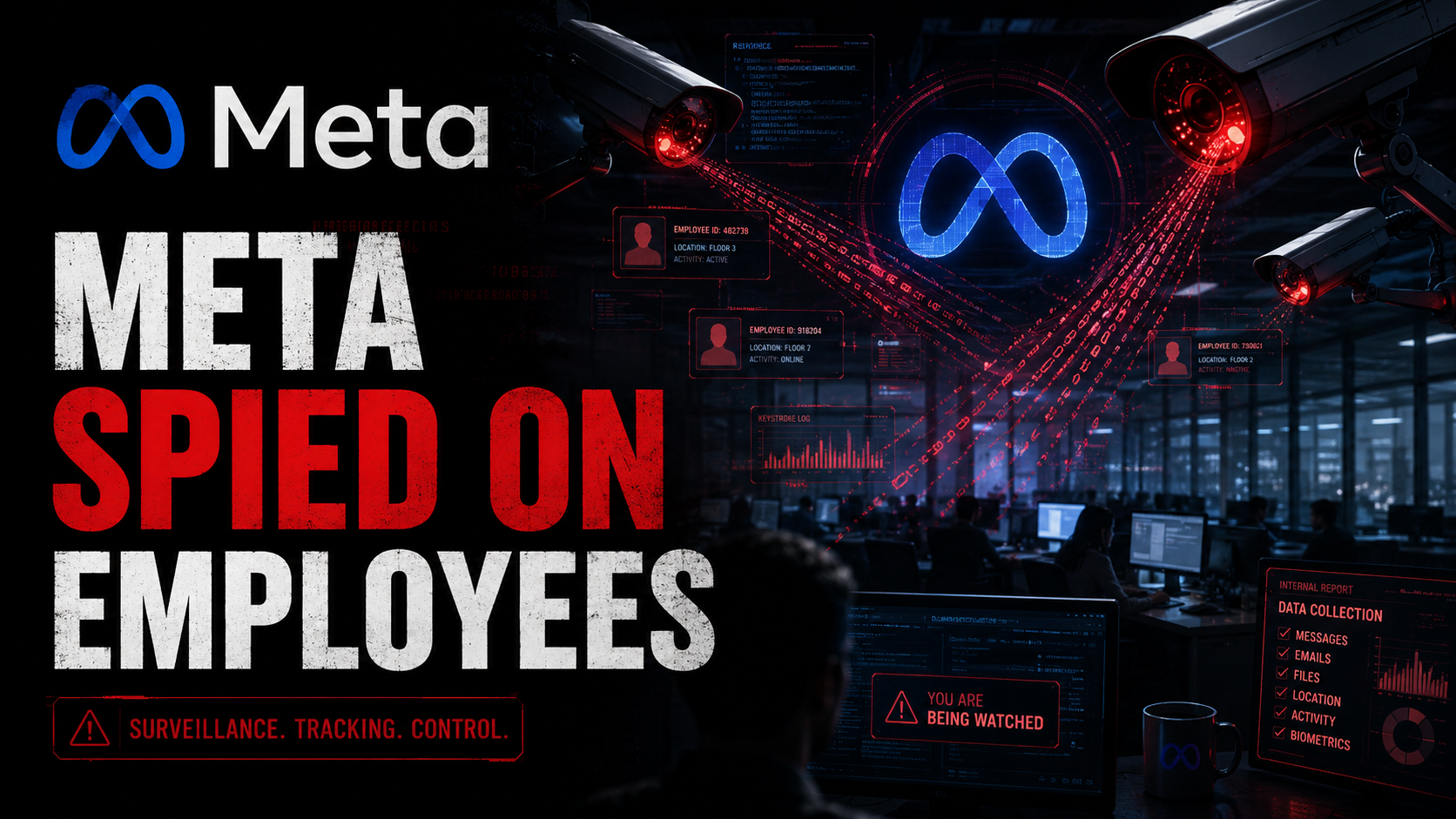
The scope of data collection is staggering. According to reports from employees who discovered the system, MCI logs:
Physical interactions including mouse movements, click patterns, and keyboard activity. Structural workflows showing how employees navigate between windows, menus, and applications. Visual context captured through periodic automated screenshots of employee workstations. Communication patterns across email and chat platforms. Code writing habits, debugging workflows, and development patterns in VS Code.
This isn’t metadata collection — it’s comprehensive behavioral surveillance designed to create a complete model of how professionals do their jobs. Every mouse click, every workflow decision, every problem-solving approach was being recorded, analyzed, and fed into Meta’s AI training pipeline.
Zuckerberg’s Defense: AI Learns From Watching Smart People
In the leaked audio, Zuckerberg frames MCI as a necessary step in building truly autonomous AI agents. His argument: to build virtual agents capable of executing complex digital workflows, the models require real-world, granular examples of how professionals navigate software.
He compares it to how apprentices learn from masters — except the apprentice is an AI system, and the master didn’t consent to the arrangement. Zuckerberg argues that the data is anonymized and that individual employees aren’t identified in the training data.
But this defense rings hollow for several reasons. First, the employees weren’t explicitly informed about the scope of monitoring. Second, the data was used for a purpose directly related to automating — and ultimately eliminating — their roles. And third, behavioral patterns can be individually identifying even when names are stripped.
The Timing Is Devastating
The audio leaked on May 19 — one day before Meta began notifying 8,000 employees that they were being laid off. The cuts represent approximately 10% of Meta’s workforce and are being executed in three waves starting at 4 AM local time for affected workers.
Beyond the 8,000 direct terminations, Meta cancelled 6,000 open requisitions, bringing the effective headcount reduction to 14,000 positions. Meanwhile, approximately 7,000 workers will be redirected into newly created AI-focused teams including Applied AI Engineering, Agent Transformation Accelerator, and Central Analytics.
The financial context makes the optics even worse: Meta reported record quarterly revenue of $56.31 billion while executing these layoffs. The company is raising AI infrastructure spending to as much as $145 billion in 2026. It has the money — it’s choosing AI over people.
No Informed Consent Was Given
The core ethical question isn’t whether the data was anonymized — it’s whether it was appropriate to harvest employee work patterns without explicit informed consent, for a purpose directly related to replacing their roles.
Meta’s employment contracts include broad data use clauses, and the company argues that MCI falls within those terms. But there’s a difference between consenting to workplace monitoring for security and performance purposes versus consenting to having your entire professional methodology captured and used to build an AI that does your job.
Multiple former Meta employees have spoken to journalists (anonymously) saying they had no idea MCI existed until the leak. The program was reportedly known only to senior leadership and the teams directly building the AI agents.
The Legal and Ethical Implications
Legal experts are already weighing in. In the European Union, where Meta has significant operations, GDPR may provide grounds for action. The regulation requires specific, informed consent for data processing — and using workplace monitoring data to train AI systems that replace workers may not meet GDPR’s requirements for lawful processing.
In the United States, the legal landscape is murkier. Most states allow employers broad latitude in monitoring workplace systems. However, California’s privacy laws and emerging AI legislation in several states could create liability. Labor lawyers have noted that if MCI data was used to identify which workers could most easily be replaced by AI, it could create novel legal theories around wrongful termination.
The ethical implications extend beyond Meta. If this approach becomes industry standard — monitor workers, train AI on their behavior, then replace them — it fundamentally alters the employer-employee relationship. Workers become unwitting AI training data generators, with the product of their labor used against their own employment interests.
Internal Fury and Public Backlash
The leaked audio has ignited fury among current and former Meta employees. Internal Workplace (Meta’s corporate social network) posts reportedly showed hundreds of comments expressing outrage, betrayal, and demands for transparency. Several affected teams — including integrity (content moderation) and cybersecurity — were among the first hit by layoffs.
Public reaction has been equally fierce. The story dominated social media discussions, with many pointing out the dark irony: the workers who built and maintained Meta’s platforms were secretly training the AI systems designed to make their roles obsolete. As one viral post put it: “They weren’t employees — they were training data that got paid.”
Meta’s stock price didn’t reflect the controversy — investors appear to approve of the efficiency gains. This disconnect between public outrage and market approval highlights the fundamental tension in AI-era capitalism: what’s good for shareholders may be devastating for workers.
What This Means for Every Tech Worker
Meta isn’t unique in pursuing this approach — they’re just the ones who got caught. Every major tech company is investing heavily in AI agents that can perform knowledge work. The question facing every tech worker in 2026: is my employer monitoring me to train my replacement?
The AI infrastructure buildout isn’t just about chatbots and coding assistants. It’s about building systems that can replicate entire professional workflows — from product management to design to engineering. MCI represents the logical endpoint of AI development: use human expertise as training data, then scale the AI to replace the humans.
For workers, the defensive strategies are limited. You can refuse to use company tools for complex workflows (impractical). You can unionize and negotiate data use terms (slow). Or you can ensure your skills evolve faster than AI can replicate them (uncertain). None of these are comfortable answers.
Conclusion
The Meta MCI leak represents a watershed moment in the AI revolution’s impact on workers. It’s no longer theoretical — a major tech company explicitly monitored employee behavior to train AI replacements, then fired those employees while posting record revenue.
Zuckerberg’s memo to staff said “success isn’t a given” in the AI era. For Meta’s 8,000 laid-off workers, that’s not a strategic insight — it’s a pink slip delivered by the very AI they unknowingly helped build.
The question facing the entire tech industry: will other companies follow Meta’s playbook? The financial incentives suggest yes. The ethical guardrails suggest… nothing. There are none.