Claude Code Is Now the #1 AI Coding Tool in 2026 — What Every Developer Must Know
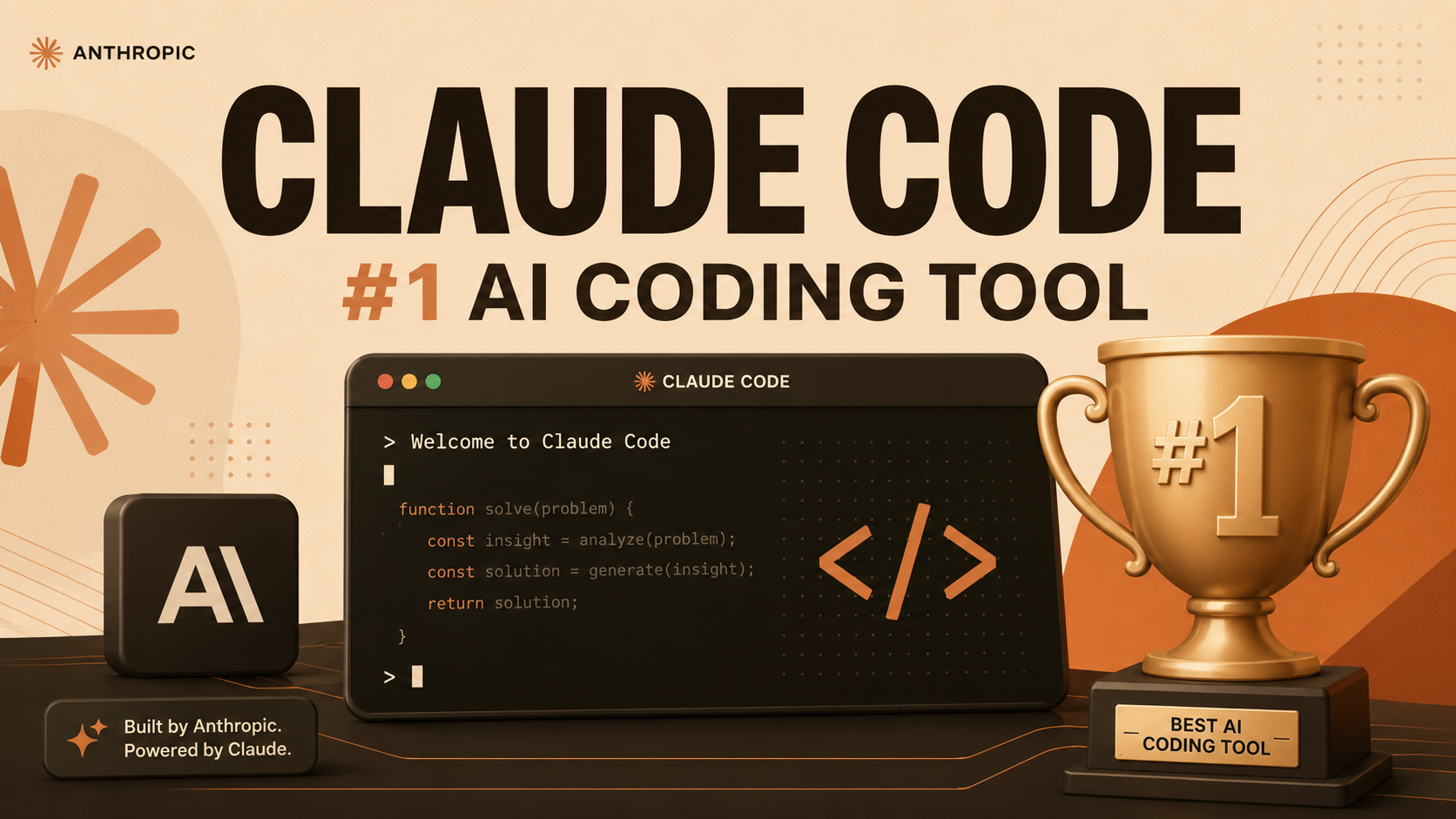
If you haven’t switched to Claude Code yet, you’re already falling behind. In just eight months since its launch in May 2025, Claude Code has overtaken GitHub Copilot and Cursor to become the most dominant AI coding tool on the planet. According to the Pragmatic Engineer Survey of 15,000 developers in February 2026, 71% of developers who regularly use AI agents choose Claude Code — making it the undisputed king of agentic coding.
But raw market share only tells half the story. Claude Code hit $1 billion in annualized revenue by November 2025 — the fastest product ramp in enterprise software history — and doubled that to $2.5 billion by February 2026. Companies like Netflix, Spotify, Salesforce, and KPMG are already using it in production. With the AI coding tools market ballooning to $12.8 billion in 2026 (up from $5.1 billion in 2024), Claude Code is eating more than its fair share of the pie.
So what exactly makes Claude Code different from everything else out there? And should you actually switch? Let’s break down the facts, features, and hard numbers that every developer needs to know in 2026.
Table of Contents
The Rise of Claude Code: From Zero to Market Leader in 8 Months
Anthropic launched Claude Code in May 2025 as a command-line agentic coding tool. Unlike traditional AI coding assistants that suggest one line at a time, Claude Code was designed from day one to handle entire workflows autonomously — reading codebases, writing files across multiple directories, running tests, debugging failures, and iterating until the job is done without constant hand-holding.
The timing was perfect. Developers were already frustrated with the limitations of autocomplete-style tools. They wanted something that could understand an entire project, not just the file currently open in their editor. Claude Code delivered exactly that, and the adoption curve was nearly vertical.
Within six months of launch, Claude Code had already crossed $1 billion in annualized revenue — a milestone that took GitHub Copilot over two years to reach. By February 2026, that figure had more than doubled. Business subscriptions quadrupled since January 2026, with enterprise clients now contributing more than half of total revenue. Anthropic itself reported serving over 300,000 business customers across its platform, with Claude Code being the primary growth driver.
The broader market tells the same story. The AI coding tools market has exploded to $12.8 billion in 2026, up from just $5.1 billion in 2024. That’s a 150% increase in just two years. And within this boom, Claude Code has captured a disproportionate share of developer mindshare and wallet share alike.
What Makes Claude Code Different From Other AI Coding Tools?
While GitHub Copilot focuses primarily on inline autocomplete and code suggestions, Claude Code operates at a fundamentally different level. It’s not a copilot — it’s more like a senior engineer you can delegate entire tasks to. Here’s what sets it apart:
1. Agentic Coding — Not Just Autocomplete
Claude Code doesn’t wait for you to ask it to complete a line. You describe what you want to build in natural language — “Add user authentication with JWT tokens and rate limiting” — and Claude Code reads your entire codebase, plans the changes across multiple files, implements them, runs your test suite, and fixes any failures automatically. The developer’s job shifts from writing code to reviewing and guiding the AI’s output.
This is what Anthropic calls “agentic coding,” and it’s the key differentiator. Traditional tools like Copilot are reactive — they wait for you to type and then suggest completions. Claude Code is proactive — it plans, executes, and iterates on its own. According to Anthropic’s internal benchmarks, Claude Code achieves 95% first-try correctness, meaning 19 out of 20 tasks work immediately without needing human intervention.
2. Full Codebase Understanding
Unlike autocomplete tools that only see the current file (or at best a few surrounding files), Claude Code understands your entire project context — including dependencies, architecture patterns, cross-file relationships, and even your team’s coding conventions. It reads your CLAUDE.md project file to understand preferences, and it can navigate complex monorepos with thousands of files.
This deep context awareness means Claude Code can make intelligent architectural decisions that respect your existing patterns. It won’t suggest a REST endpoint when your project uses GraphQL, and it won’t import a library you’ve deliberately avoided.
3. Terminal-First Design
Unlike IDE-bound tools, Claude Code runs directly in your terminal. This means it works with any editor, any language, any framework. Whether you use VS Code, Vim, JetBrains, or Emacs — Claude Code doesn’t care. It operates at the file system level, which gives it more power and flexibility than any IDE plugin.
It also integrates directly with your existing development workflow: Git commits, branch management, CI/CD pipelines, and deployment scripts are all within its reach. You can tell Claude Code to “fix the failing CI tests on this branch” and it will pull the error logs, identify the issue, make the fix, and push the commit.
Claude Code’s 2026 Feature Stack: Hooks, MCP, Agent Teams, and More
Claude Code in 2026 is far more powerful than the initial version launched a year ago. Anthropic has been shipping features at a relentless pace. Here are the major capabilities that make it the most advanced AI coding platform available today:
Hooks: Deterministic Control Points
Hooks give you programmable control over Claude Code’s behavior. You can set up pre-commit hooks that run linters before any code is committed, notification hooks that alert your team on Slack when Claude makes changes, or validation hooks that enforce coding standards automatically. Think of hooks as guardrails that let you trust the AI while maintaining quality control.
MCP Servers (Model Context Protocol)
MCP is like USB-C for AI — one standard protocol, hundreds of connectors. With MCP integration, Claude Code can connect to issue trackers (Jira, Linear), databases (PostgreSQL, MongoDB), monitoring tools (Datadog, Sentry), browser automation, design tools (Figma), documentation systems, and internal APIs. You install an MCP server, and Claude Code can call it by name during any task.
This transforms Claude Code from a coding tool into a full development operations platform. Need to pull a bug report from Jira, reproduce it locally, fix it, write tests, and close the ticket? Claude Code can do all of that in a single session.
Agent Teams: Collaborative AI Squads
One of Claude Code’s most powerful 2026 features is Agent Teams — the ability to spawn multiple Claude instances that collaborate on different subtasks simultaneously. Unlike simple sub-agents that work in isolation, Agent Teams can communicate with each other directly, self-assign tasks from a shared list, and even challenge each other’s findings.
In Anthropic’s own demo, 16 agents built a 100,000-line C compiler in Rust over two weeks — at a total cost of roughly $20,000 in tokens. For large projects, this is a game-changer: one agent handles the backend, another writes tests, a third updates documentation, and a fourth reviews everything — all running in parallel.
Background Tasks and Async Workflows
Claude Code now supports background execution. You can press Ctrl+B while an agent is running to send it to the background, then use /tasks to monitor all running processes. This means you can kick off a complex refactoring job, continue working on something else, and come back when Claude Code is done.
Skills: Reusable AI Workflows
Skills are markdown files that teach Claude Code repeatable workflows, invoked as slash commands. Instead of pasting the same 200-word prompt every time you want a code review, you write a SKILL.md once and call /review forever. Skills can be shared across teams, versioned in Git, and composed together for complex workflows.
Claude Code vs GitHub Copilot vs Cursor: The 2026 Comparison
| Feature | Claude Code | GitHub Copilot | Cursor |
|---|---|---|---|
| Primary Strength | Agentic workflows | Inline autocomplete | IDE-integrated AI |
| Full Codebase Understanding | Yes — entire project | Partial — limited context | Good — project indexing |
| Multi-file Edits | Excellent | Limited | Good |
| Agent Teams | Yes — up to 16+ agents | No | No |
| MCP Integration | Extensive ecosystem | GitHub-focused | Limited |
| Terminal-Native | Yes | No — IDE only | No — IDE only |
| First-Try Accuracy | 95% | ~70% | ~80% |
| Developer Satisfaction | 46% most loved | Declining | Growing |
| Paid Users | Growing fast | 4.7M subscribers | $2B ARR |
| Best For | Complex projects, startups | Enterprise, simple tasks | IDE power users |
| Price | $20/mo (Pro) | $10/mo (Individual) | $20/mo (Pro) |
The verdict: Claude Code dominates for complex, multi-file agentic tasks. GitHub Copilot still holds strong in large enterprise environments with existing GitHub infrastructure. Cursor offers the best IDE-integrated experience. But for developers who want maximum productivity and are willing to work from the terminal, Claude Code is the clear winner in 2026.
The Numbers That Tell the Story
Let the data speak for itself. Here are the key statistics that define Claude Code’s dominance in 2026:
- 71% of developers who use AI agents regularly choose Claude Code (Pragmatic Engineer Survey, Feb 2026)
- 46% “most loved” rating among 15,000 surveyed developers
- 95% first-try correctness rate on coding tasks
- 90% of professional developers now use at least one AI coding tool daily
- 73% of engineering teams use AI coding tools daily (up from 41% in 2025)
- $2.5 billion annualized revenue as of February 2026
- $1 billion reached in just 6 months — fastest in enterprise software history
- 300,000+ business customers served by Anthropic
- 75% of startups report Claude Code as their primary AI coding tool
- $12.8 billion total AI coding tools market in 2026
These aren’t vanity metrics. They represent a fundamental shift in how software gets built. The era of the solo developer writing every line of code by hand is ending. The era of the developer-as-architect who guides AI agents is beginning.
Who Should Use Claude Code in 2026?
Claude Code isn’t for everyone — at least not yet. Here’s a practical breakdown:
You should switch to Claude Code if:
- You work on complex, multi-file projects that require architectural understanding
- You want to ship features 3-5x faster without sacrificing code quality
- You’re comfortable working in a terminal and don’t need an IDE-centric workflow
- You work in a startup or small team where speed matters more than process
- You want to automate repetitive development tasks (code reviews, test writing, documentation)
You might want to stick with alternatives if:
- You’re in a large enterprise with strict compliance requirements and deep GitHub integration
- You prefer inline autocomplete over full-task delegation
- You need a polished IDE experience (consider Cursor instead)
Getting Started With Claude Code
Getting up and running with Claude Code takes less than five minutes. Here’s the quick start:
- Install: Run
npm install -g @anthropic-ai/claude-codein your terminal - Navigate:
cdinto your project directory - Launch: Type
claudeand hit enter - Authenticate: Sign in with your Anthropic account
- Start building: Describe what you want in natural language
For best results, create a CLAUDE.md file in your project root that describes your project’s architecture, preferred libraries, coding conventions, and any special instructions. This gives Claude Code the context it needs to make decisions that align with your team’s standards. Check out our guide to building AI agents for more advanced workflows.
The Future: Agentic AI Is the New Normal
The rise of Claude Code signals a broader transformation in software development — from AI as a suggestion engine to AI as an autonomous collaborator. We’re witnessing the same kind of paradigm shift that happened when developers moved from assembly to high-level languages, or from bare metal to cloud computing.
The developers who adapt fastest to working with agentic AI will have a massive productivity advantage. Those who dismiss it as a fad will find themselves competing against developers who ship in days what used to take weeks. As the Mandiant M-Trends 2026 report shows, AI is already transforming every corner of technology — and software development is no exception.
Claude Code’s rise to #1 in just 8 months is not a coincidence — it’s a reflection of what developers actually need in 2026. With $2.5 billion in annual revenue, 71% agent market share, 95% first-try accuracy, and a 46% “most loved” rating among 15,000 developers, the numbers make an overwhelming case. The future of coding is agentic, and that future is already here.
Want to stay updated on the latest AI and developer tools? Check out more articles on SudoFlare Tech News and our Tutorials section for hands-on guides.