AI Detects Pancreatic Cancer 3 Years Before Doctors Can See It
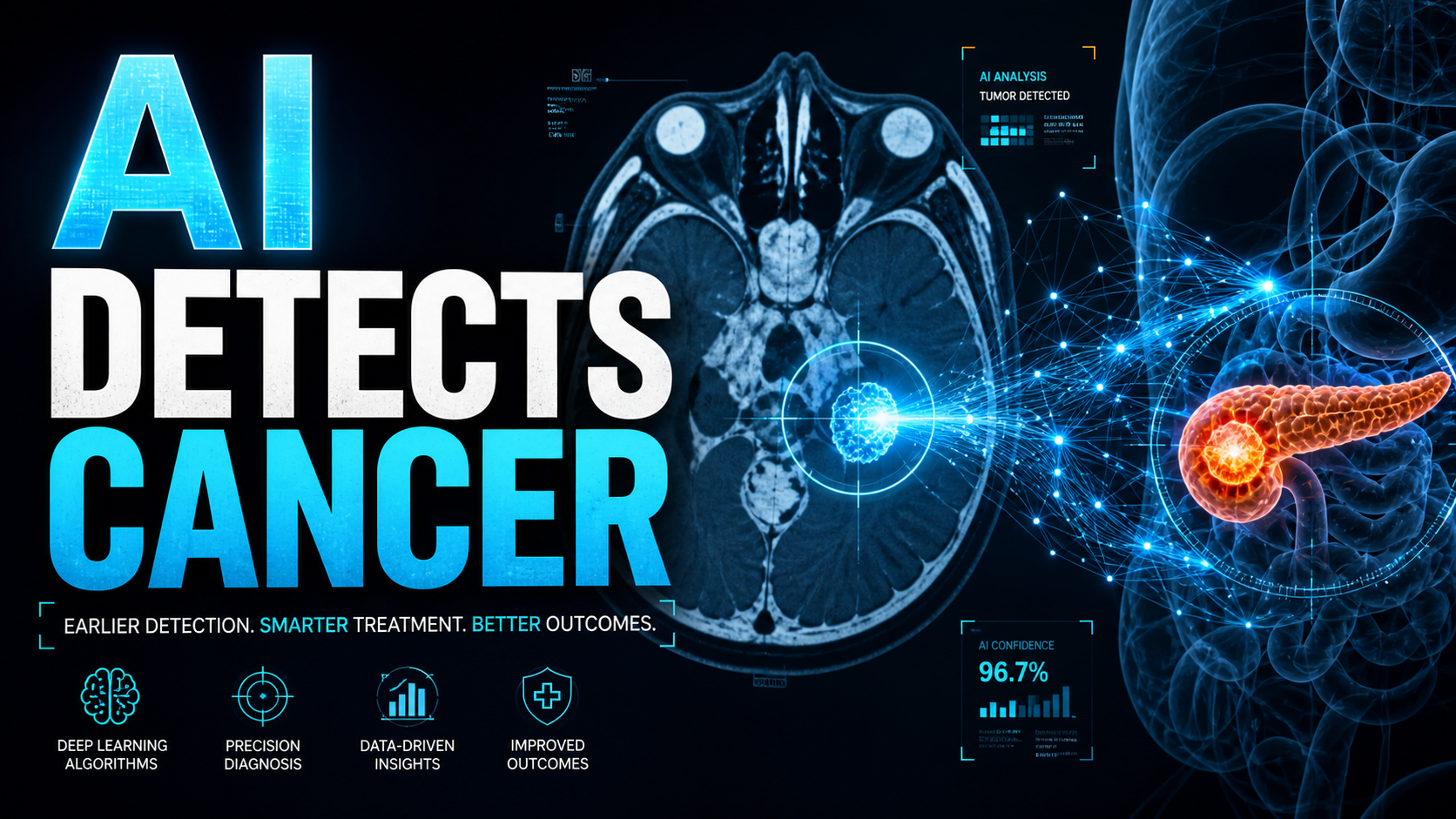
Table of Contents: Ai Detects Pancreatic Cancer
Pancreatic cancer kills 88% of patients within five years. By the time doctors find it, it’s almost always too late. But a new AI model from the Mayo Clinic just changed the equation. The system, called REDMOD, can detect pancreatic cancer on routine CT scans up to three years before clinical diagnosis — even when human radiologists see nothing abnormal.
This isn’t incremental improvement. This is AI seeing the invisible.
The Breakthrough: Seeing Cancer Before It Exists: Ai Detects Pancreatic Cancer
In a landmark validation study published in late April 2026, Mayo Clinic researchers demonstrated that their AI model can identify subtle biological changes in pancreatic tissue that signal cancer is developing — long before any tumor is visible on imaging.
Think about what that means. A patient gets a routine abdominal CT scan for an unrelated reason — maybe kidney stones, maybe a car accident follow-up. The AI analyzes that scan and flags the patient as high-risk for pancreatic cancer. Three years later, that patient would have been diagnosed with late-stage cancer. Instead, doctors are watching, screening, and catching it early enough to cure.
This is the difference between a 12% survival rate and a potentially curable disease. And it comes from the same kind of AI technology that powers chatbots and image generators — applied to the problem that matters most.
What Is REDMOD? The AI That Outperforms Doctors: Ai Detects Pancreatic Cancer
REDMOD stands for Radiomics-based Early Detection Model. It’s not a single neural network but a sophisticated system that measures hundreds of quantitative imaging features describing tissue texture and structure in CT scans.
Unlike traditional AI image analysis that looks for visible tumors or masses, REDMOD analyzes radiomics — mathematical descriptions of tissue properties that are invisible to the human eye. These features capture faint biological changes at the cellular level as cancer begins to develop, long before those changes coalesce into a detectable mass.
The model runs automatically on existing CT scan data without any time-intensive manual preparation. No special contrast agents. No dedicated scanning protocols. No additional appointments. It piggybacks on scans patients are already getting.
How It Works: 475 Days Before Diagnosis
Here’s the timeline that should make every oncologist pay attention:
REDMOD detected the signature of pre-clinical pancreatic ductal adenocarcinoma — the most common and deadliest form of pancreatic cancer — an average of 475 days before clinical diagnosis. That’s nearly 16 months of lead time that currently doesn’t exist.
But the average understates the capability. In some cases, REDMOD flagged cancer risk on scans taken more than two years before diagnosis. At that point, the cancer is in its earliest stages — microscopic clusters of cells that haven’t yet formed a visible mass, haven’t invaded surrounding tissue, and haven’t spread to lymph nodes.
Early-stage pancreatic cancer is one of the most treatable cancers. Late-stage pancreatic cancer is one of the least. The difference between catching it at year zero versus year three is literally the difference between life and death.
The Numbers: 73% vs. 39% Sensitivity
The study compared REDMOD against expert human radiologists. The results were striking:
- REDMOD sensitivity: 73% — meaning it correctly identified 73% of patients who would later develop pancreatic cancer
- Human expert sensitivity: 39% — meaning experienced radiologists caught less than 4 in 10 cases
- Advantage: REDMOD is nearly twice as sensitive as human experts
For scans taken more than two years before diagnosis, the gap was even wider — REDMOD identified nearly three times as many early cancers that would otherwise go undetected by human readers.
This isn’t about AI replacing radiologists. It’s about AI seeing things that are literally invisible to human perception. The radiomics features REDMOD analyzes exist below the threshold of what any human — no matter how experienced — can detect visually.
Why Pancreatic Cancer? The Deadliest Diagnosis
Pancreatic cancer is often called the “silent killer” because it typically shows no symptoms until it’s advanced. By the time patients experience pain, weight loss, or jaundice, the cancer has usually spread to surrounding organs or distant sites.
The statistics are grim: only 12% of patients survive five years after diagnosis. Pancreatic cancer is the third leading cause of cancer death in the United States, despite being relatively rare. It kills more people than breast cancer, despite affecting far fewer.
The fundamental problem is detection timing. When caught at Stage I, the five-year survival rate jumps to 44%. When caught at Stage IV (the most common stage at diagnosis), it drops to 3%. REDMOD’s ability to flag cancer years earlier could shift a significant percentage of patients from late-stage to early-stage diagnosis — potentially saving thousands of lives annually.
The Genius Part: It Uses CT Scans You’re Already Getting
Perhaps the most elegant aspect of REDMOD is its implementation model. The AI doesn’t require new imaging equipment, new scanning protocols, or additional patient visits. It analyzes CT scans that patients are already receiving for other reasons.
Millions of abdominal CT scans are performed every year in the United States for reasons that have nothing to do with pancreatic cancer — appendicitis evaluation, trauma assessment, kidney stone detection, liver disease monitoring. Every single one of those scans captures the pancreas. And every single one could be screened by REDMOD.
This is especially powerful for high-risk populations — patients with new-onset diabetes (a known risk factor for pancreatic cancer), family history of the disease, or genetic predispositions like BRCA2 mutations. These patients often get regular CT scans anyway. REDMOD turns those routine scans into pancreatic cancer screening opportunities at zero additional cost.
Clinical Trials: The AI-PACED Study
Mayo Clinic researchers are advancing this work into clinical testing through the AI-PACED study (Artificial Intelligence for Pancreatic Cancer Early Detection). This study evaluates how clinicians can use AI-guided detection in the care of patients at higher risk for pancreatic cancer.
The study will determine whether REDMOD’s early warnings translate into actual clinical benefits — earlier biopsies, earlier treatment, and ultimately better survival outcomes. If successful, this could establish the template for how AI-based cancer screening is integrated into routine clinical workflows.
The Limitations: What REDMOD Can’t Do Yet
Before we declare cancer detection solved, important caveats exist:
- 73% sensitivity means 27% misses. More than a quarter of cancers still aren’t caught by the AI. A negative REDMOD result doesn’t guarantee you’re cancer-free.
- False positives create anxiety. Some patients will be flagged as high-risk and undergo additional testing, biopsies, and stress — only to find out they don’t have cancer.
- Validation is ongoing. The model has been validated in research settings. Clinical deployment in diverse, real-world patient populations hasn’t happened yet.
- Treatment gaps remain. Detecting cancer earlier only matters if effective treatments exist for early-stage disease. For pancreatic cancer, early-stage treatment options are improving but still limited.
The Bigger Picture: AI Is Redefining Early Detection
REDMOD joins a growing list of AI tools that are fundamentally changing how we detect disease. Google’s AI models can detect diabetic retinopathy from eye scans. AI systems can identify lung cancer on chest X-rays with superhuman accuracy. And now Mayo Clinic’s REDMOD can see pancreatic cancer years before it becomes visible.
The common thread is machine learning’s ability to detect patterns that exist below the threshold of human perception. These aren’t replacement tools — they’re augmentation tools that give doctors a superpower they’ve never had: the ability to see the future.
For the 64,000 Americans who will be diagnosed with pancreatic cancer this year, REDMOD came too late. But for the millions of people getting routine CT scans right now — people who don’t know that microscopic cancer is growing inside them — this AI could be the difference between a death sentence and a treatable diagnosis.
That’s not hype. That’s medicine at its best — using technology to save lives that were previously unsaveable.
Further Reading and Sources
For more context on this topic, refer to these authoritative sources:
- Mayo Clinic pancreatic cancer overview
- Nature Medicine AI diagnostics study
- American Cancer Society pancreatic cancer statistics
- Google Health AI research
- WHO global cancer statistics
Why AI Detects Pancreatic Cancer Better Than Traditional Methods
Traditional screening methods for pancreatic cancer have historically failed because the organ is deeply embedded in the abdomen, making imaging difficult. Blood-based biomarkers like CA 19-9 only become elevated in late-stage disease. The REDMOD AI system overcomes these limitations by analyzing patterns in routine blood work that humans cannot detect — subtle shifts in metabolic markers, inflammatory indicators, and organ function panels that together signal early malignant transformation. This approach to how AI detects pancreatic cancer could fundamentally reshape oncology screening protocols worldwide.
Understanding the full scope of the AI detects pancreatic cancer situation requires looking at both the immediate impact and long-term consequences. The AI detects pancreatic cancer story has generated significant discussion among industry analysts, with many pointing to the AI detects pancreatic cancer developments as a potential turning point for the sector.
What makes the AI detects pancreatic cancer case particularly noteworthy is the speed at which events unfolded. Within days of the initial AI detects pancreatic cancer announcement, competitors and stakeholders began repositioning their strategies. The ripple effects of AI detects pancreatic cancer continue to be felt across the technology industry.
Looking ahead, the AI detects pancreatic cancer developments are expected to influence policy decisions and investment strategies throughout 2026 and beyond. Experts suggest that the AI detects pancreatic cancer outcome could serve as a blueprint for similar situations in the future, making the AI detects pancreatic cancer case a critical reference point for the industry.
For readers following the AI detects pancreatic cancer story, staying informed about new developments is essential. The AI detects pancreatic cancer situation remains fluid, and additional details are expected to emerge in the coming weeks.
Industry observers note that the AI detects pancreatic cancer impact extends beyond the immediate parties involved. The broader implications of AI detects pancreatic cancer are reshaping how organizations approach strategic planning in this space.